

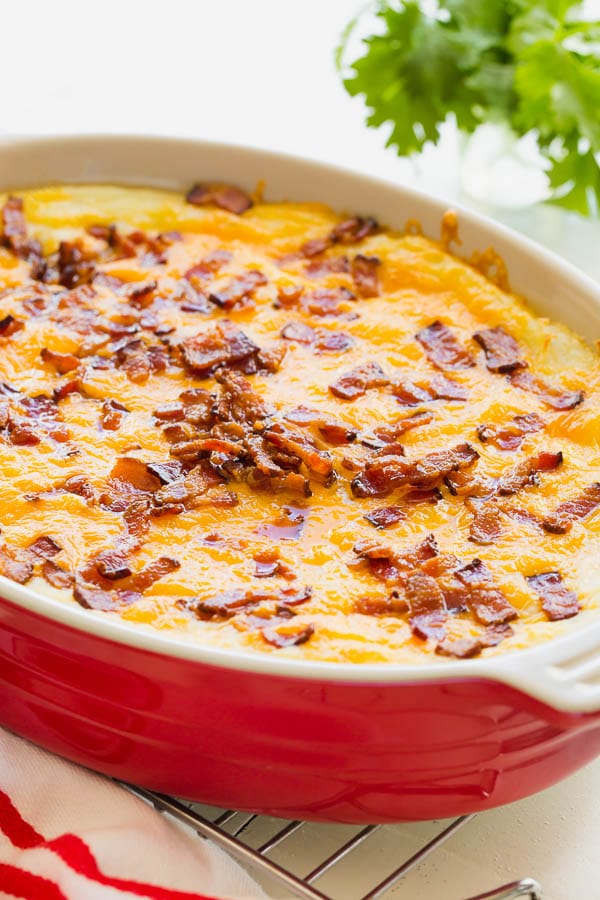
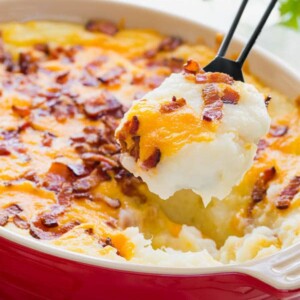
With a rich, creamy filling and all the best toppings, this loaded mashed potato casserole is the perfect make-ahead side dish for family-friendly weeknight dinners and holiday feasts!
Pin this now to find it later
Pin ItWhy you’ll love this mashed potato casserole recipe
It’s no secret that I’m a huge fan of mashed potatoes. They’re one of my favorite foods! The only thing I love more than my roasted garlic mashed potatoes or brown butter mashed potatoes is this loaded mashed potato casserole recipe.
Surprisingly easy to make it never fails to impress!
- Large Batch – One batch makes up to 12 servings, making it perfect for feeding a crowd.
- Make Ahead – You can easily prepare the dish in advance, and reheat it just before serving, making it a game-changer when preparing for the holidays.
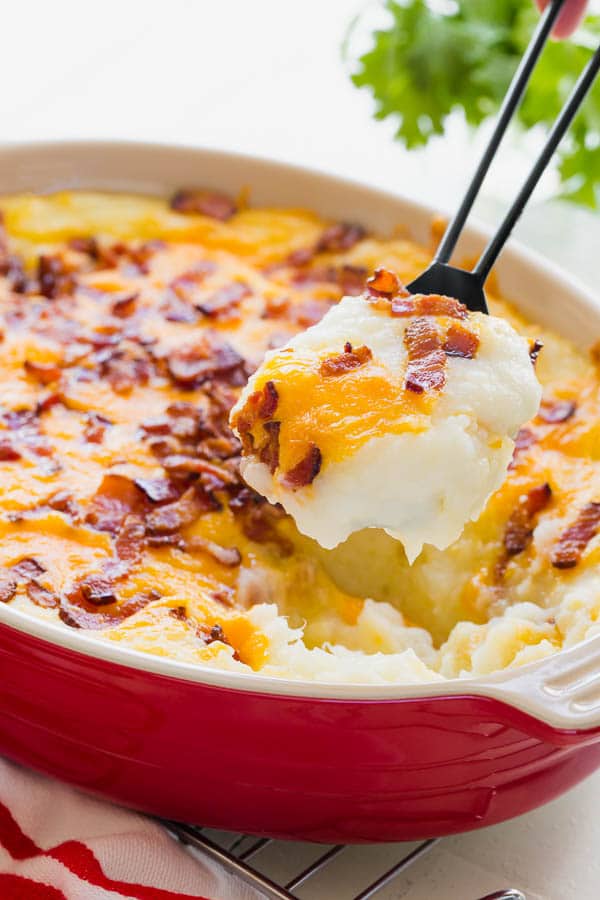
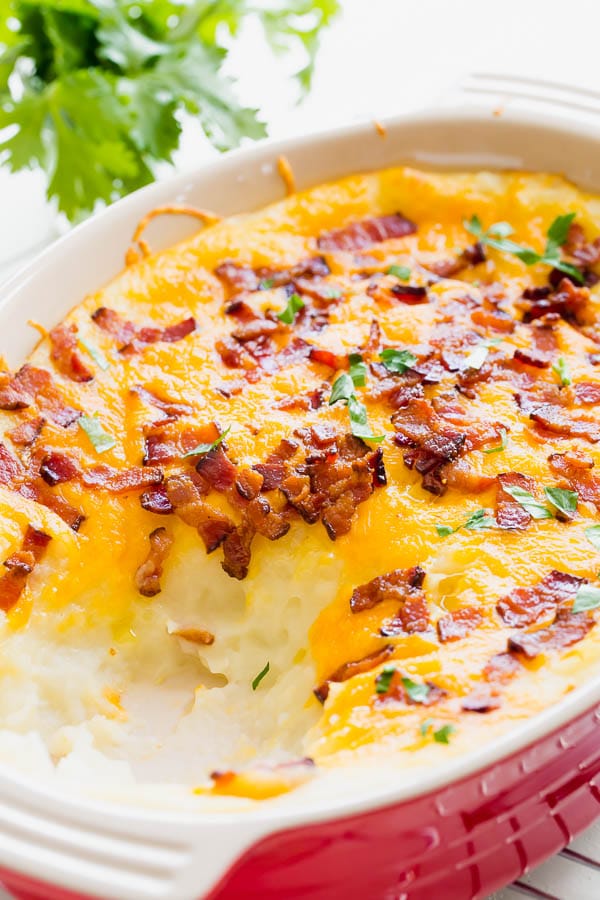
- Flavorful – Every bite is packed with rich, velvety mashed potatoes, savory spices, smokey bacon, and gooey cheese!
Not only is this make-ahead mashed potato casserole a crowd-pleasing recipe, but it pairs well with pretty much anything from chicken, to steak, seafood, Thanksgiving turkey, and even perfect prime rib!
Key Ingredient Notes
- Russet potatoes – I always use Russet potatoes, because they have a low moisture content and absorb the butter and seasonings well. However, you can also use German butterball potatoes or Yukon gold potatoes if preferred. For the best results, use high-starch potatoes or a combination of starchy and waxy potatoes.
- Herbs and spices – I include a bay leaf, salt, garlic powder, and pepper to create a savory, lightly herbaceous taste.
- Bacon – I use center-cut bacon, but any type will work. Cut it into small strips.
- Milk – I highly recommend using whole or 2% milk, because they have a sweeter taste and creamier consistency than other varieties. Be sure to warm it up before adding it to your potatoes!
- Butter – A must-have in any mashed potato recipe! I highly recommend using unsalted butter so you have better control of the flavor. If using salted butter, make sure to taste your potatoes before adding more salt.
- Cream cheese – This is my secret weapon for creating a velvety consistency and creating a drool-worthy taste. Sour cream will also work.
- Cheddar cheese – The perfect finishing touch! I always recommend grating a block of cheese because it melts easier and has a smoother texture, compared to pre-shredded cheese from a bag.
How to make loaded mashed potato casserole
1. Prepare the potatoes
- Peel the potatoes, if desired.
- Cut the potatoes into medium-sized pieces, and transfer them to a large pot filled with cold water.
- Add the bay leaf and salt.
- Bring the liquid to a boil over medium-high heat, and cook until the potatoes are fork-tender, about 15-20 minutes.
- Remove the bay leaf, and drain the water.

2. Cook the bacon
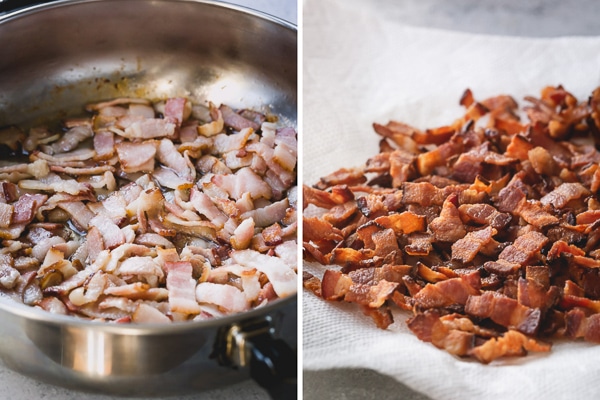
- While the potatoes boil, cook the bacon in a skillet over medium heat until nice and crispy, about 5-6 minutes.
3. Mash the potatoes
- Add the milk, butter, and cream cheese to the cooked potatoes.
- Use a potato masher to mash the potatoes to your desired consistency.
- Season with garlic powder, salt, and pepper.

Don’t let the potatoes cool
Start mashing the potatoes while they’re hot. If you wait for the potatoes to cool, they’ll become stiff and gluey, and it’ll be harder to combine all the ingredients.
4. Assemble the casserole
- Transfer the mashed potatoes to a 9×13 baking dish, spreading them out evenly.
- Top the potatoes with the cheese and crumbled bacon.
- Bake at 350°F until the top is golden brown and the cheese is melted, about 40-45 minutes.
- Serve hot!
Tips for Success
- Generously salt the cooking water. Potatoes love salt and absorb its flavor well while they’re boiling. However, this is only true while they’re in the hot water. After they’re removed, no amount of added salt will help the flavor of your potatoes. So, use a heavy hand when boiling! Most of the salt will be dumped with the water.
- Work quickly while ingredients are hot. It’s crucial to begin mashing the potatoes right away. Use hot milk and softened butter, too! Otherwise, the potatoes begin to release too much starch, becoming gummy and gluey, which is not what we want!
- Don’t overwork the potatoes. I do not recommend using blenders, food processors, or other high-speed gadgets to mash your potatoes. This overworks them, making them gummy. Instead, stick with a potato masher or a potato ricer if you want an extra silky consistency.
- Adjust the milk. Depending on how thick and creamy you like your potatoes, you may need to include more or less milk than what is listed. Start slowly, adding a splash at a time until your desired consistency is reached.
- Shred the cheese. For the best taste and texture, buy a block of cheese, and grate it yourself. Pre-shredded varieties contain anti-caking agents that impact their flavor and prevent them from melting.
Make-Ahead Tips
Prepare the casserole through step 8 in the recipe card, leaving off the bacon and cheese. Then, cover the baking dish with foil, and refrigerate the mashed potatoes for up to 4 days.
When you’re ready to bake, bring the potatoes to room temperature on the counter for about an hour. Then, continue as normal, adding the toppings, and baking.
Use leftovers
Feel free to use leftover mashed potatoes for this recipe, too. Just store them in the fridge until you’re ready to serve. Then, transfer them to a baking dish, sprinkle cheese and bacon on top, and bake until heated through.
Storing Tips
Store leftovers covered in the fridge or transferred to an airtight container in the refrigerator for up to 3 days. If possible, I recommend storing the bacon separately to prevent it from becoming soggy.
To reheat, warm individual portions in the microwave. Or, transfer the casserole dish back to the oven for 30-45 minutes or until heated through. If the top begins to brown too quickly, cover it with foil, and continue to bake.
I don’t recommend freezing leftovers, because all the dairy in this dish doesn’t tend to thaw well!
FAQs
Some people like to soak their potatoes before boiling to remove excess starch and prevent the potatoes from becoming too gummy. However, I don’t find it necessary for this recipe!
I find it’s best to cut potatoes before boiling. This allows for faster, more even cooking and prevents the potatoes from absorbing too much water, which can cause them to become gummy.
I always recommend rinsing potatoes before cooking to remove any dirt or debris! However, I don’t find it necessary to rinse them after cooking. As long as you don’t over-mash them, you shouldn’t have a problem with excess starch!
More Potato Recipes
Loaded Mashed Potato Casserole
Ingredients
- 4 lbs (2 kg) russet potatoes
- 1 bay leaf
- 1 ½ tablespoons salt
- 6-8 bacon strips cut into small pieces
- 1 cup (240 ml) warm milk preferably whole
- 4 oz (113 g) unsalted butter
- 8 oz (225 g) cream cheese
- 1 teaspoon garlic powder
- Salt and pepper to taste
- 6 oz grated cheddar cheese
Instructions
- Peel the potatoes, if desired. Cut into medium pieces and place them in a large pot, filled with cold water. Add bay leaf and salt.
- Bring it to a boil over medium high heat. Continue to cook until potatoes are nice and tender, 15-20 minutes.
- Remove bay leaf and drain the hot water.
- Preheat the oven to 350°F (177°C).
- While potatoes are cooking, cook the bacon in a skillet over medium heat until nice and crispy, 5-6 minutes.
- Add milk, butter and cream cheese into the cooked potatoes.
- Using potato masher, mash the potatoes until nice and smooth (or chunky, however you like). Season with garlic powder, salt and pepper to taste.
- Transfer the mashed potatoes into 9×13-inch baking dish and spread it evenly.
- Top the mashed potatoes with cheese and bacon.
- Bake the casserole for 40-45 minutes, or until it’s golden brown. Serve hot.
⭐️ Did you make this recipe?
Please leave a review and let us know how you liked it!
Tips & Notes
– Store leftovers covered in the fridge or transferred to an airtight container in the refrigerator for up to 3 days. If possible, I recommend storing the bacon separately to prevent it from becoming soggy.
– To reheat, warm individual portions in the microwave. Or, transfer the casserole dish back to the oven for 30-45 minutes or until heated through. If the top begins to brown too quickly, cover it with foil, and continue to bake.
– I don’t recommend freezing leftovers, because all the dairy in this dish doesn’t tend to thaw well!
Nutrition

This recipe was originally shared on October 12, 2017.





Have doing this to my turkeys for over 20 years. I didn’t know how special this was. Great job! I learned from my Mother.
These loaded mashed potatoes look amazing!!!
Thank you, Jocelyn!