

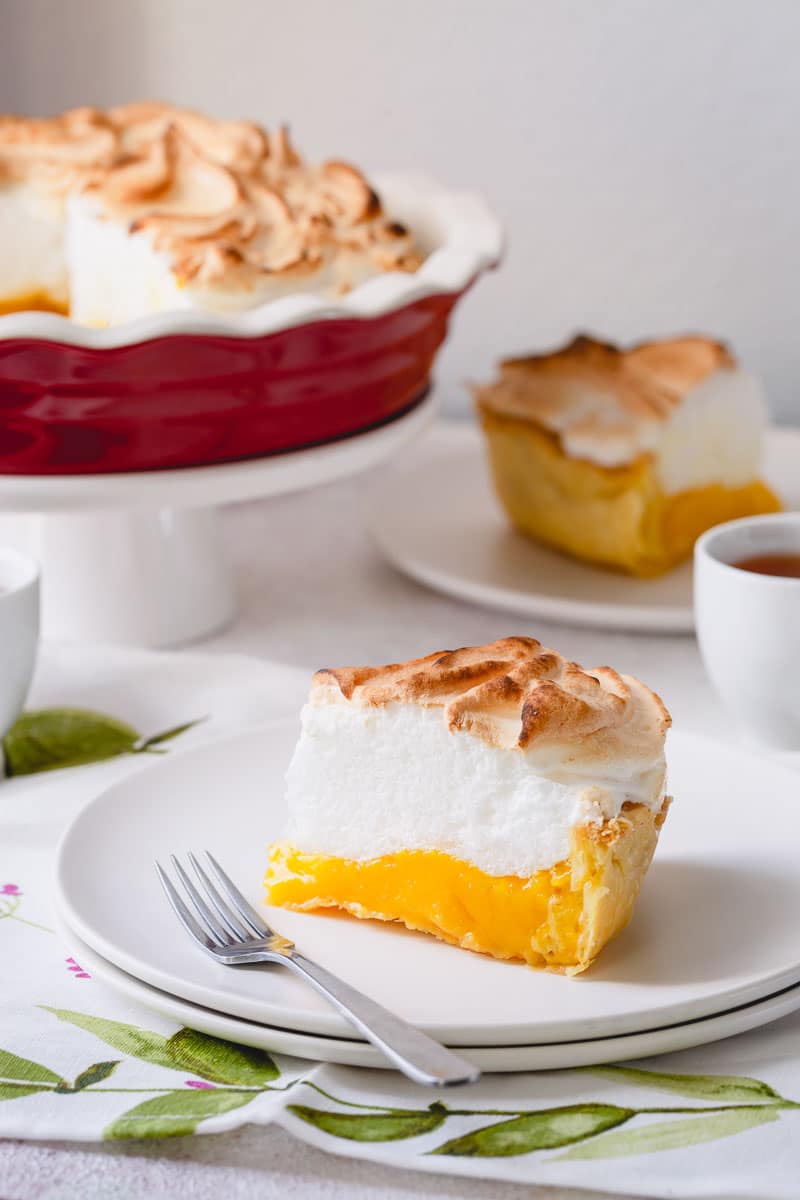
This classic lemon meringue pie recipe features a buttery homemade crust and tart lemon filling and is finished with a sweet, fluffy meringue topping. With my tips and tricks, you’ll have success every time, creating a picture-worthy pie that’s so delicious!
Pin this now to find it later
Pin ItWhy you’ll love this recipe
If you know me, you know I adore all things chocolate like chocolate cake and chocolate macarons. But I have to admit that lemon meringue pie might be my favorite pie of all time, and my version is the best you’ll ever taste!
Here are just a few reasons why it’s not only mine but my family’s favorite treat, too:
- The silky smooth lemon pie filling is firm enough to hold its shape when sliced, but not thick and gelatinous (think a jello-like consistency) at all.
- The filling is not cloyingly sweet and is full of bright zesty lemon flavor.
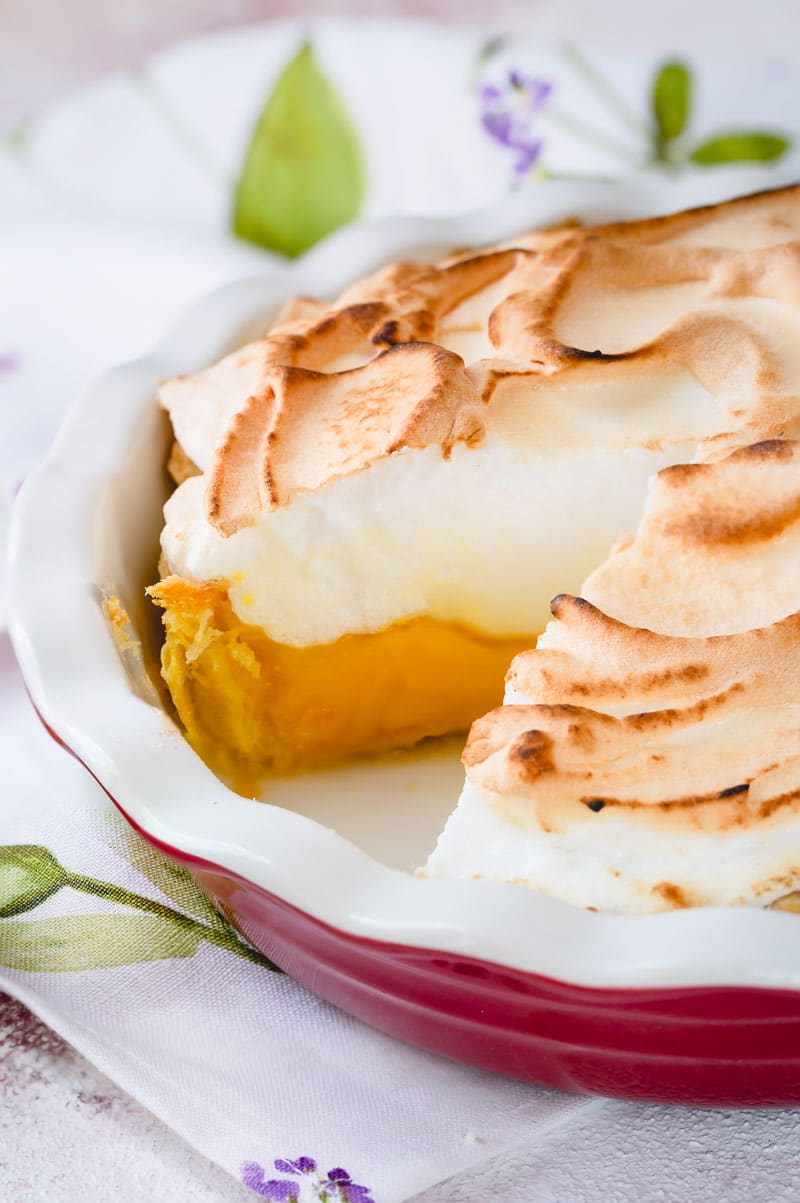
- Cloud-like fluffy meringue topping is toasted to perfection.
Honestly, what’s not to love? I’ll walk you through all my tips and tricks so you can avoid any weeping or shrinking and feel like a pie-making pro.


Key Ingredient Notes
- Pie crust – I use my homemade all-butter pie crust, but you can use graham cracker crust or any homemade or pre-made crust you like best.
Filling
- Lemon – We’re using both lemon juice and lemon zest for a bright, bold filling. Learn more about lemons and how to use them in even more recipes with my lemon 101 post!
- Cornstarch – This acts as a thickening agent and prevents the filling from beading by absorbing excess moisture.
- Flour – This helps provide more structure, working as a backup for the cornstarch to help thicken the filling and prevent it from running.
- Butter – This adds a delicious rich flavor. I always recommend using unsalted butter for desserts!
- Egg yolks – These make the filling lusciously thick and creamy. Just make sure to temper them so they don’t curdle.
Meringue
- Egg whites – Separate the egg whites while they’re cold. I’ve tested this recipe with fresh and carton egg whites. Fresh is better because not all brands of carton egg whites work for meringue.
- Sugar – For this recipe, we’re using granulated sugar, NOT powdered sugar to sweeten the filling. If you’re interested, you can keep reading to learn about the different types of sugar.
- Cornstarch – Again, this acts as a thickener, helping us achieve beautiful peaks and a stable meringue.
Avoid bitterness
Zest your lemon before juicing, and be careful not to get any of the white pith. Otherwise, your filling may be a little bitter.
How to make lemon meringue pie
Before you begin, preheat the oven to 375°F.
1. Prepare the pie crust
- Follow my recipe for making buttery pie crust.
- Roll the dough into a 10-inch circle on a floured surface.
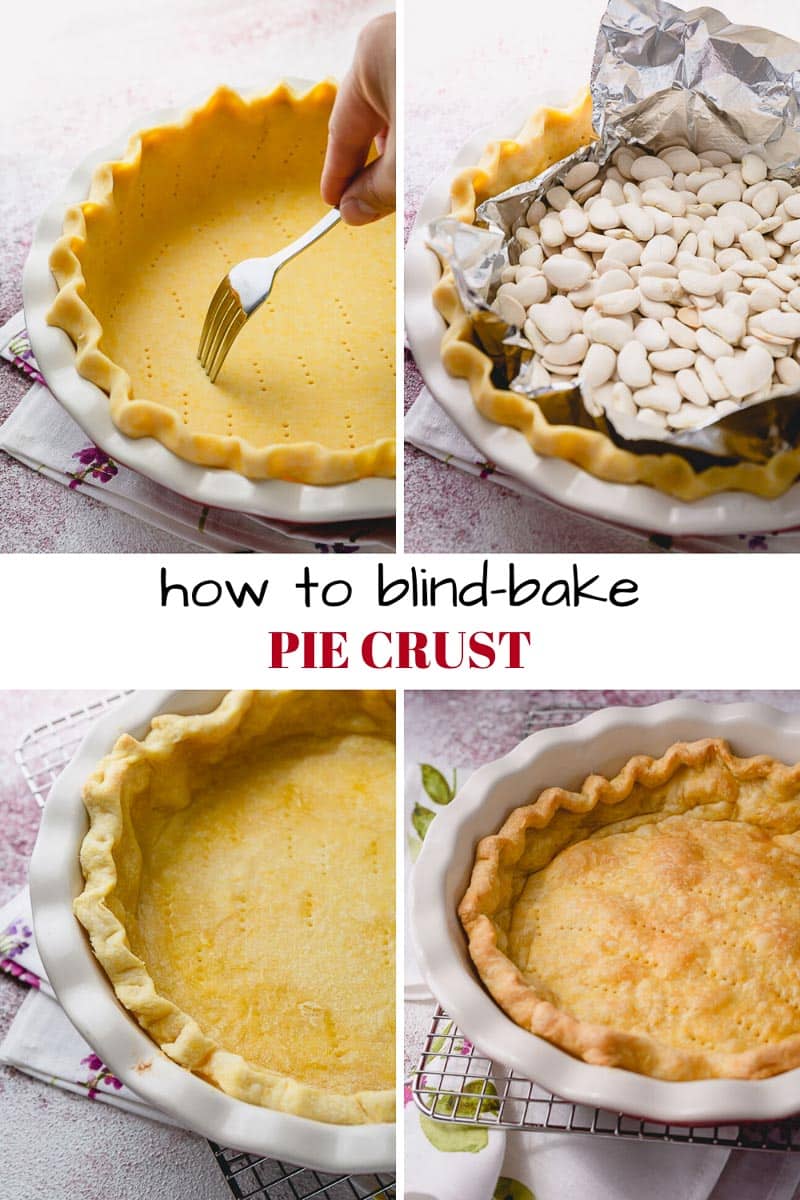
- Transfer the dough to a 9-inch pie pan, fold the edges, and pierce holes all over with a fork.
- Cover the crust with foil, and pour raw ice, dry beans, or pie weights on top. Then, bake for 15 minutes. This is called blind baking and allows the crust to puff up so it doesn’t become soggy once we add the filling!
- Remove the foil with the rice or beans, and continue to bake until golden brown.
2. Make the meringue
I recommend making the meringue before making the lemon curd because you want to cover the lemon curd filling with the meringue right away while the filling is still piping hot. This prevents the weeping meringue issue.
- Whisk the sugar and cornstarch in a small bowl.
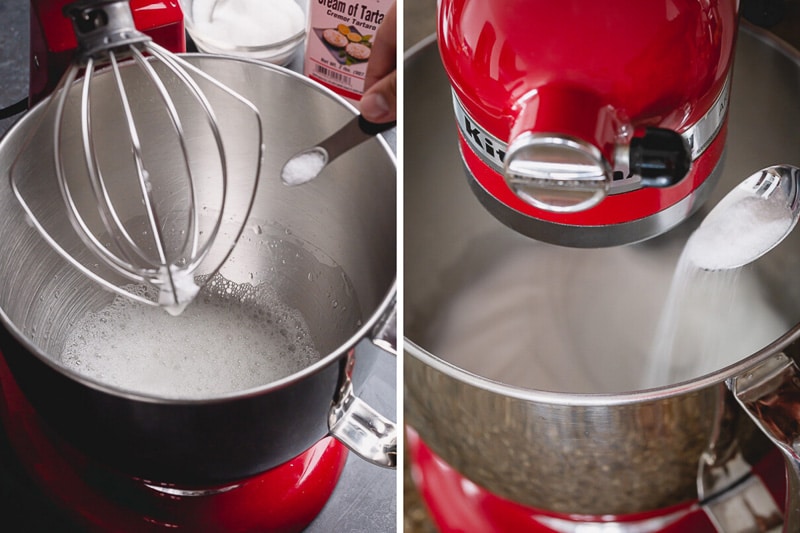
- Beat the egg whites with salt and cream of tartar until foamy.
- Slowly add the sugar mixture one tablespoon at a time, and continue to beat on medium-high speed until hard peaks form.
3. Make the lemon curd filling
- Mix the water, lemon juice, sugar, cornstarch, flour, lemon zest, and salt in a medium saucepan.
- Bring the mixture to a boil over medium heat, stirring constantly.
- Temper the egg yolks by adding them to a small bowl with about half a cup of lemon juice, and whisk vigorously. This prevents them from curdling!
- Pour the egg mixture into the saucepan, and continue to cook for about 3-5 minutes, stirring continuously.

- Remove the pan from heat and stir in the butter.
- Transfer the hot filling to the pre-baked crust.

4. Assemble the pie
- Whip the meringue for 30 seconds to revive the structure.
- Spread the meringue on top of the lemon filling immediately. Make sure to spread it all the way across and seal the edges. You shouldn’t see any yellow peaking through!
- Bake for 8-10 minutes or until the meringue is golden brown. Be careful not to burn!

How to prevent weeping meringue
Weeping meringue is one of the most common problems bakers encounter with lemon meringue pie. Here 3 tips to prevent this issue:
- Don’t over-whip the meringue! Due to lower sugar content, this meringue is easy to over-whip. So keep a close eye on it!
- Cornstarch in the meringue stabilizes the meringue preventing it from weeping even on a hot day.
- Cover the pie with meringue while the lemon filling is piping hot. That way piping hot filling cooks the meringue from the bottom, preventing the meringue from breaking down.
Tips for Success
- Make sure your tools are super clean! When making meringue, it’s crucial to avoid any oil/fat residue in the bowl and whisk. Or your egg whites might not whip into stiff fluffy meringue.
- Be careful when separating egg whites and yolks. You don’t want any broken yolk in your egg whites. Egg yolk is fat and it’ll compromise the meringue structure.
- Use room-temperature egg whites. They whip faster and achieve a better volume. Let them sit on the counter for about 30 minutes to warm slightly before whipping.
- Be careful not to over-whip the meringue. Stop as soon as it holds a peak when you lift the mixer.
- Assemble the pie while the filling is piping hot. Spread the meringue over the piping hot lemon filling. The filling will cook the meringue from the bottom, preventing it from breaking down.
- Avoid overcooking the filling. Cornstarch is the main thickening agent in the filling. It activates at boiling temperature but loses its thickening ability when it’s boiled for too long or at too high a temperature. Therefore, we are adding flour along with cornstarch as a backup. Be sure not to overcook the mixture, though, or it will run all over the place.
- Prevent shrinking. Shrinking is when a meringue topping shrinks at the edges and exposes the filling. To prevent this issue, spread the meringue over the crust, ensuring the edges are sealed all around.
- Don’t overbake the pie. Keep a close eye on your oven, and remove the pie as soon as the meringue is lightly golden.
- Allow the pie to cool completely before cutting into the pie. And don’t refrigerate the pie before it’s completely cooled.
How to cut lemon meringue pie neatly
If you’ve ever tried to cut into a lemon meringue pie, you know it can be a little tricky. However, I’ve discovered a failproof method to crate clean cuts with no tearing or need for butter!
- Use a serrated knife to gently score a line where you want to cut. Use a small back-and-forth motion.
- Cut all the way down, wiping the knife with a moist towel after each slice.

Lemon Meringue Pie Troubleshooting
There’re a few common issues when it comes to lemon meringue pie. Let’s discuss each problem and how to prevent them.
Issue #1: Runny filling
- Cornstarch is the main thickening agent in the filling. It activates at boiling temperature but loses its thickening ability when cooked for too long or at too high a temperature. To prevent this issue, be sure not to overcook the mixture.
Issue #2: Weeping
- Weeping is when water pools between pie filling and meringue topping. It is the most frustrating issue of all. To prevent this issue, make sure that the lemon filling is hot from the stove when you spread the meringue over it. The hot filling will cook the meringue from the bottom, preventing a watery pie. This is why I recommend preparing the meringue before you start making the filling.
Issue #3: Shrinking
- Shrinking is when meringue topping shrinks at the edges exposing the filling. To prevent this issue, do spread the meringue over the crust making sure that the edges are sealed all around.
Issue #4: Beading
- Beading is when small droplets of water appear on the surface of the pie. In my mind, this is not really an issue. It happens due to moisture. To minimize this, we are adding cornstarch in the meringue, because cornstarch also absorbs excess water. Also, avoid over-baking the pie and don’t put a warm pie into the fridge.
Make-Ahead Tips
Prepare the pie dough up to 3 days in advance, and store it covered in the fridge. Or, freeze it for up to 3 months! I recommend making a few crusts at once to keep on hand whenever a lemon meringue pie craving hits.
Storing Tips
This recipe is best served right away because the meringue topping doesn’t hold long. However, you can store leftovers covered in the fridge for up to one day.
I don’t recommend freezing lemon meringue pie! The texture and filling will change, and the meringue will become gummy and chewy. It’s not super appetizing.
FAQs
Technically, you can, but the lemon flavor won’t be as strong. Plus, you need lemon zest. So, it just makes more sense to use fresh lemons!
Yes, leftover pie should always be stored in the fridge.
Tempering the egg yolks is key to preventing them from curdling! While it may sound complicated, tempering simply means adding a small amount of hot liquid into the yolks while continuously whisking it.
More Lemon Desserts

Lemon Meringue Pie
Ingredients
FOR FILLING:
- 1 cup (240 ml) water
- 1 cup (200 g) granulated sugar
- ½ cup (120 ml) fresh lemon juice
- 3 tablespoons cornstarch
- 2 tablespoons all-purpose flour
- 1 tablespoon lemon zest
- ¼ teaspoon table salt
- 2 tablespoons (30 g) unsalted butter
- 4 egg yolks
FOR MERINGUE:
- 4 egg whites
- 6 tablespoons granulated sugar
- 1 tablespoon cornstarch
Instructions
To prepare the pie crust
- Preheat oven to 375°F (190°C).
- Roll the pie crust into 10-inch circle on floured surface.
- Transfer it to 9-inch pie pan, fold the edges and pierce holes with a fork.
- Now we need to blind-bake the crust to prevent the crust to puff up. In order to do that, cover the crust with a foil and pour raw rice or bean on top (or pie weights).
- Bake for 15 minutes. Then remove the foil with rice/beans and bake for another 15-20 minutes, or until golden brown.
- To make the meringue, in a small bowl, whisk together sugar and cornstarch.
- In a large mixing bowl with whisk attachment, beat egg whites until foamy.
- Then slowly add sugar mixture one tablespoon at a time and continue to beat on medium high speed until hard peaks form. Set aside.
To make the lemon curd filling
- In a medium saucepan, mix together water, lemon juice, sugar, cornstarch, flour, lemon zest and salt. Bring the mixture to a boil over medium heat, stirring constantly.
- To temper egg yolks, add about half cup of lemon juice mixture into the egg yolks and stir vigorously. Return the egg mixture back to the saucepan. Continue cooking for 3-5 minutes, continuously stirring.
- Throw in the butter.
- While butter is melting in the filling, briefly whisk the egg whites for a minute.
To assemble the pie
- Transfer the hot filling into pre-baked pie crust and immediately spread the meringue over the filling, making sure to seal the edges.
- Bake the pie for 8-10 minutes, or until meringue is golden brown.
- Cool completely on wire rack at room temperature, 1-2 hours, before serving.
⭐️ Did you make this recipe?
Please leave a review and let us know how you liked it!
Video
Tips & Notes
– This recipe is best served right away because the meringue topping doesn’t hold long. However, you can store leftovers covered in the fridge for up to one day.
Nutrition

This post was originally shared on January 3, 2013.






I have an interesting question. I am just concerned about weeping. So, would i be able to poke holes in the crust (and pre-bake) and then add hot lemon filling then the meringue to prevent weeping? I am just worried that the hot filling with cause the crust to get soggy or get under/through the holes. Thanks!
Marissa, great questions! Piercing the crust prevents the crust to puff up unevenly and cooks the crust nice and flat. During pre-baking, those holes get filled back though, so you won’t get crust with holes. And actually, you’re not making huge holes and you don’t really have to pierce all the way through too. Just slightly pierce the crust all over. And no, pouring hot lemon filling over the crust doesn’t make your crust soggy. Hope this helps.
What a beautiful pie! I just made one the other day – we just love lemon anything! Thanks for all the tips, Shinee. Great post 🙂 Pinning and sharing
Me too, lemon is awesome! Thanks, Marion.
Shiner, just made this recipe today. Took it out of the oven about two hours ago and so far no shrinking or weeping. Thanks for your helpful tips. Like your reader Taryn, I too am not a big fan of tart pies. My mother-in-law gave me this tip – add three tablespoons of whole milk to the egg yolks and whisk before tempering them into the filling. While I haven’t tasted the whole pie yet I had a little filling left over so I put it in a bowl and gave it to my husband. He raved about the filling so I tried it. I think the milk addition helped to smooth out the tartness. Can’t wait to try the pie! Thank you again!
Oh how interesting! Thank you for sharing this tip, Lisa. Hope you enjoyed your pie!!
I LOVE lemon meringue pie and I don’t make it nearly often as much as I should. Super tips in this post! Pinned to try later!
Thanks so much, Elizabeth. I, too, feel like I don’t make it often enough. 🙂
Hi.. question.. do bigger pies take longer to set?
Hi, Lisa. I’d say so, especially if they’re taller. If they’re just wider, may not be.
could i make it the day beforee and refrigerate uncovered? i dont know it that causes weeping.
thank you for your detailed, experienced, wonderful recipe.
Perfect for Easter lunch, just do not have time to make it before our guestss arrive. i may take the chance!
Hi, Sylvia! Yes, you can make it a day in advance, and like you said, uncovered. It might develop small beading on the meringue though, but in my opinion, it’s not really a big deal. Hope you enjoy!
I am making you right now I’m working on the Meringue but for some reason it’s not holding its peak
Oh, even a little bit of egg yolk, or traces of oil can ruin the meringue. Make sure to use absolutely clean bowl and mixer, also be careful not to include any yolk. Hope it turned out though.
Can you store the filling over night in the fridge and then apply the meringue in the morning? I only have time to make this recipe the day before it will be served but do not want to run into any runniness or weeping.
Elsa, the filling needs to be piping hot when you cover it with meringue. Although I haven’t tried this method, you may try preparing the filling in advance and heat it up in the microwave or something before putting in the crust. Hope this helps.
when you microwave it, does it just become hot or does it dry in the shape you microwaved it in? Also for how long do you stick the meringue in the microwave/oven before putting it on the pie?
Aisha, I suggested microwaving the made-ahead lemon curd filling to bring it to piping hot temperature, if you had to make the pie in advance. I personally never tried this myself, so I can’t suggest on how long to microwave it to heat it up. I also think you should microwave it covered so it doesn’t dry out. Again, I didn’t test this method, and I highly recommend make everything and assemble the pie the day you’re planning to serve it.
How do you store it?
Hi, Michelle! Store the pie in the fridge uncovered.
Just made this today:)easy to follow and the result..mmmm yumm:)thank you for sharing the recipe:)
You’re welcome, Anett! I’m glad you made this pie and liked it! It’s our family favorite! 🙂
So beautiful. And thanks for the troubleshooting guide – very useful!
You’re welcome, Kate! Thanks for stopping by. Hope you will make this perfect pie! Let me know how it turned out, if you do. 🙂
ямар гоё юм хийдийн бэ..
өөрөө хаана байдаг бэ
Bayarlalaa, Erka! Bi USA-d amidardag.