Explore different types of thickening agents and how to use them in this Thickening Agents 101 guide. From gelatin and pectin to cornstarch, tapioca, and agar-agar, we cover them all!

Pin this now to find it later
Pin ItWhat are thickening agents?
In simple terms, thickening agents thicken and/or gel food. They transform liquids into semi-solid and fully solid states, completely changing the texture without altering the flavor.
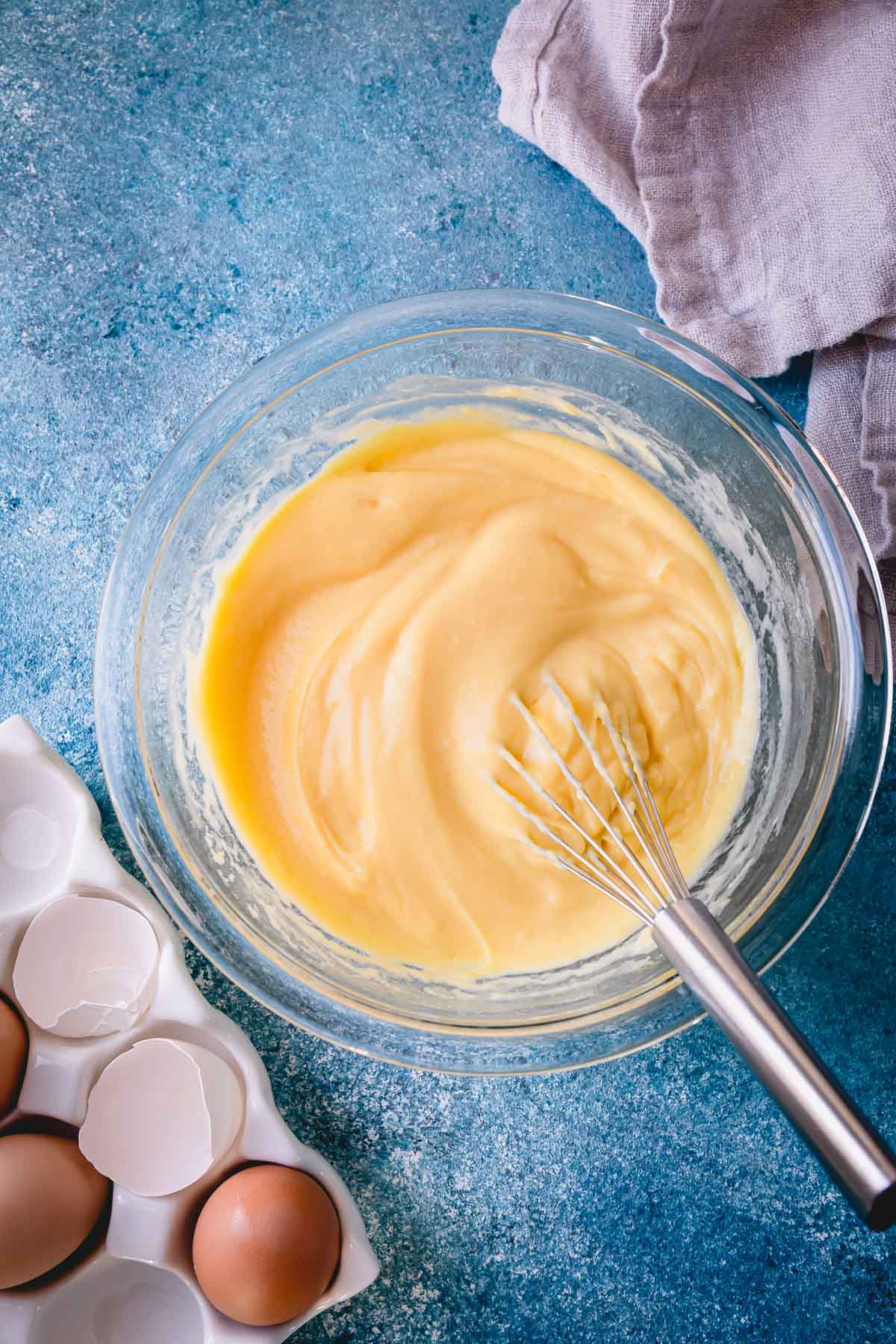
Thickening agents are a key ingredient in recipes for jelly, pie filling, mousse, custard, and pudding, as well as various sauces, soups, and gravies.
Without thickening agents, you couldn’t make luxuriously smooth pastry cream, banana cream pie, or fluffy homemade marshmallows!


Types of Thickening Agents
Gelatin
What is gelatin?
An animal-based thickening agent commonly derived from collagen, gelatin turns liquids into gel.
For most of us, hearing the word gelatin brings to mind Jell-O, the wobbly, brightly colored dessert from our childhood.
However, gelatin is also found in marshmallows, gummy candy, and even some pies and cakes.
Types Gelatin and Bloom Strength
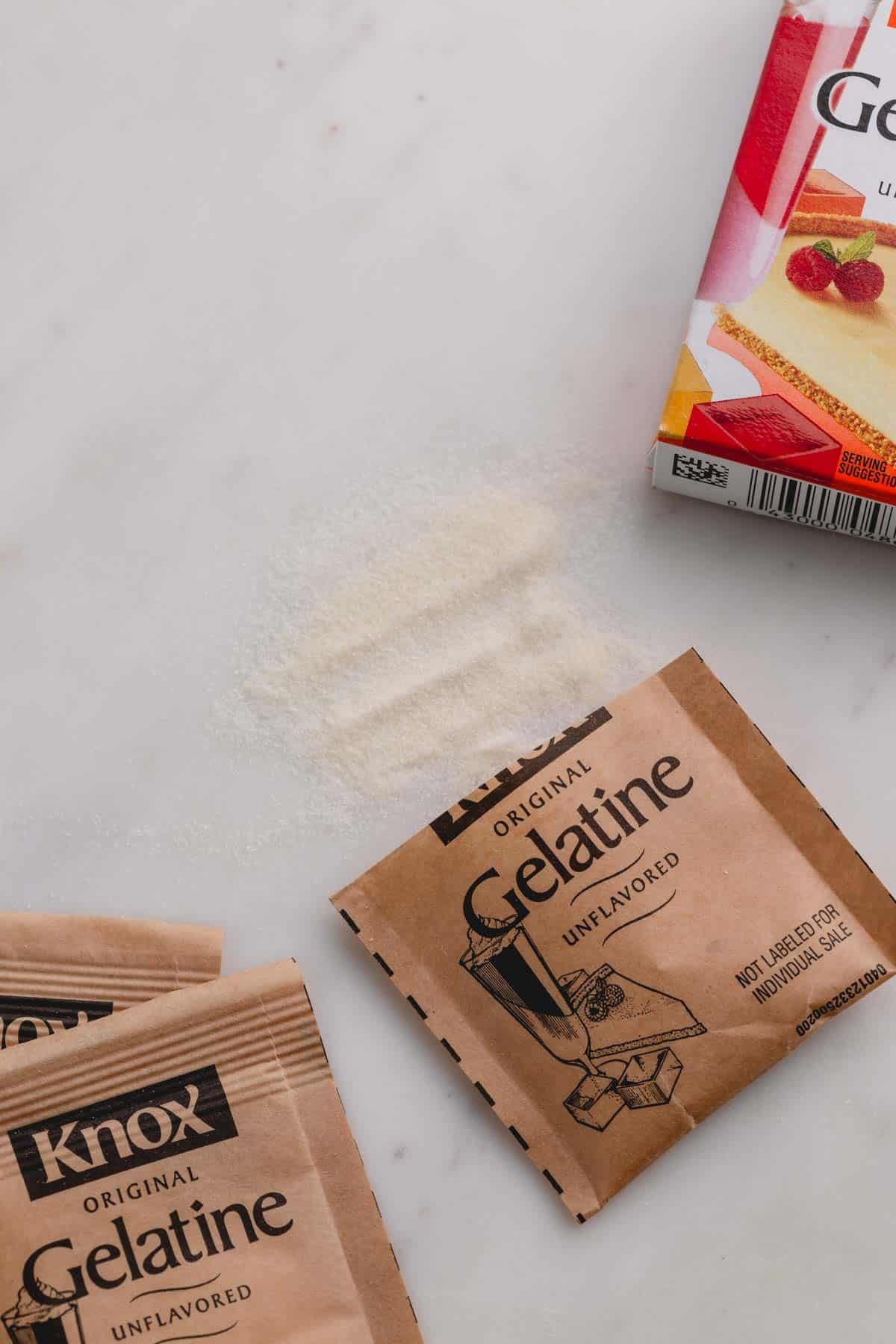
Gelatin comes in different forms: granules, powder, and sheets. While there’s no big difference between using either type of gelatin, the difference is in its strength, which is measured in bloom strength. Bloom strength of most gelatin varies between 50 to 300 bloom.
Knox brand unflavored gelatin is the most common gelatin in the U.S. It is 250 bloom strength, and one packet of Knox gelatin will gel 2 cups (500ml) of liquid. One packet = 2.5 teaspoons/1 tablespoon/7g.
How to Substitute Gelatin with different Strength
You can substitute gelatin with different strength, but you’ll need to do some math. For example, say the recipe calls for 5g of sheet gelatin with 160 bloom, and you have gelatin powder with 250 bloom.
The formula: (160/250) x 5 = 0.64 x 5 = 3.2g.
Therefore, you’ll need to use 3.2g of your gelatin powder with 250 bloom.
How to use gelatin
- To use powdered gelatin, sprinkle your desired amount in an even layer over cold water, making sure all of the gelatin granules are touching the water. Let the gelatin sit for about 5 to 10 minutes to bloom. Then, dissolve the bloomed gelatin in hot water before mixing it with any other ingredients.
- To use gelatin sheets, submerge the sheets in a bowl of cold water for about 10 minutes. Then, dissolve the sheets in hot water.
PRO TIP: There are a few things that affect the gelling properties of gelatin.
- Salt and strong acids (pH below 4) decreases the gelling ability
- Sugar, milk and alcohol increases the gelling ability
- Some tropical fruits, like pineapple, papaya, kiwi, passion fruit, contain enzymes that destroy gelling ability of gelatin. Therefore, it’s recommended to cook these fruits to 185°F (85°C) to destroy those enzymes before adding gelatin.
Pectin
What is pectin?
A natural thickening agent found in fruits, pectin gives jams and jellies their spreadable, gel-like consistency.
Almost all fruits and berries, and even some vegetables (carrots, beets, and pumpkin) contain pectin. However, some fruits such as apples, cranberries, grapes, raspberries, and blackberries, contain moderate to high levels of natural pectin and will easily turn into jam when exposed to heat. That’s why this raspberry jelly recipe (without pectin) firms up perfectly!
Pectin activates when there’s high sugar content. And it’s mostly used for making jellies, coulis and confitures.
Commercial Pectin vs. Natural Pectin
Commercial pectin comes in handy when making jams or jellies with low-pectin fruits, like strawberries, pears, and peaches. It’s also needed when using overly ripe fruit, as pectin levels are at their highest right before ripening and gradually decrease over time.
Natural pectin is present in fruits and vegetables, while commercial pectin is derived from apples or citrus peels. It’s sold as a shelf-stable powder and can be found in the baking section of most grocery stores.
How to use pectin
Natural pectin gets right to work once the fruit reaches a specific temperature during heating. You’ll know the natural pectin is doing its thing when you see the fruit become thick and jammy.
On the other hand, commercial pectin is mixed with the rest of the recipe ingredients, usually before heating. It activates as the jelly mixture comes to a boil.
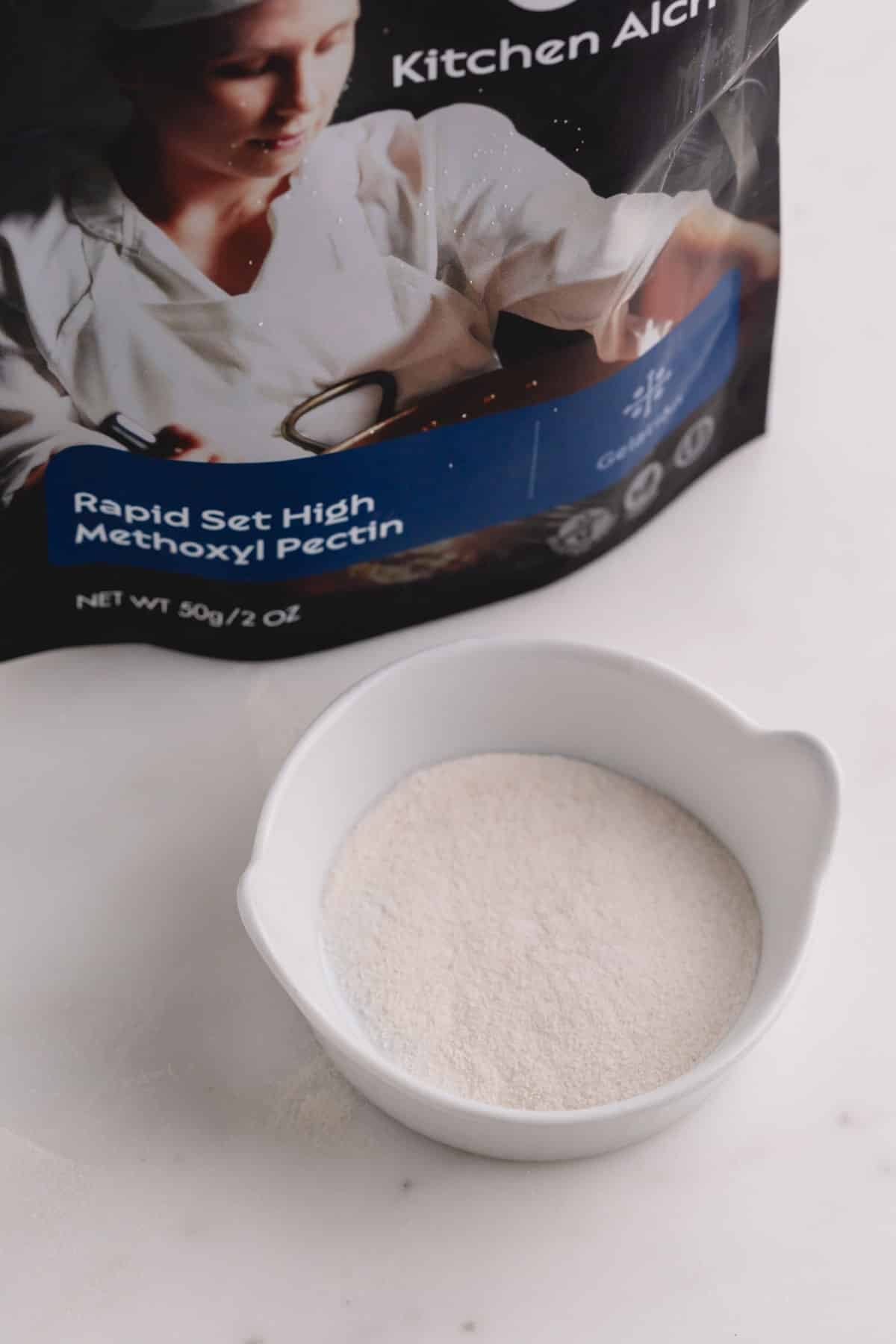
What is Pectin NH?
I love using Pectin NH to make fruit confitures for filling french macarons.
Pectin NH is a low methoxyl pectin (LV) variation, and its main advantage is that is thermo-reversible, which means you can re-melt the set filling and set it again.
Another advantage of pectin NH over regular pecin is that it doesn’t require high amount of sugar to activate the thickening properties.
Starches: Cornstarch and Tapioca Starch
What is cornstarch?
Cornstarch is a gluten-free, flavorless white powder made from corn. And it’s used to thicken soups, sauces, gravy, and certain types of desserts.
It has more thickening power than flour and works its magic in mere minutes. It’s a key ingredient in my homemade vanilla pudding!
Cornstarch mixed in cold water won’t do anything. The magic happens when you heat the mixture with conrstarch. As it heats, the cornstarch granules absorb water and start to swell, thickening the mixture.
How to use cornstarch
Cornstarch is a fool-proof thickening agent for food as long as it’s mixed into a slurry first.
To make a cornstarch slurry, combine a 1:2 ratio of cornstarch to cold water. Whisk the cornstarch and water until smooth, and pour it into a hot liquid to activate.
Cornstarch Don’ts
- Do NOT add cornstarch directly to the liquid you want to thicken, because it will clump up!
- Do NOT boil the mixture with cornstarch too long, minimun 2-3 minutes and no more than 5 minutes.
- Do NOT whisk vigorously. Gently stir as needed.
What is tapioca starch?
Derived from the root of the cassava plant, tapioca starch is a gluten-free flour used to thicken soups, sauces, and stews.
It’s a common ingredient in gluten-free flour blends and is ideal for making tapioca pudding and tapioca pearls, those little balls in boba tea!
How to use tapioca starch
Like cornstarch, tapioca starch must be made into a slurry before it’s added to a hot liquid. To do so, combine equal parts tapioca flour with cold water, and whisk until smooth.
TIP: Avoid bringing your liquid to a boil, because it can break down the tapioca, making it less effective at thickening.
Agar-agar
What is agar-agar?
A vegan alternative to gelatin, agar agar is a thickening agent derived from seaweed.
Similar to gelatin, it turns liquids into gel and can be used to make jelly, gummy candies, and pudding. Gels thickened with agar agar are stable at room temperature.
It’s primarily sold in powder or flake form, with the powder being more potent.
Just like pectin NH, agar agar is also thermo-reversible.
TIP: Agar agar comes in different strength. For example, agar agar 700, 900, and 1200. And it’s important to pay attention what strength agar agar is called for in the recipe for proper set.
How to use agar-agar
Before using agar agar powder, it must first be dissolved in water over medium heat. It’s best to combine it with sugar before adding it to the liquid.
Once dissolved, bring the water to a boil, and simmer for a few minutes to thicken.
The process is the same for agar flakes. However, agar flakes take longer to dissolve. So, more stirring and a longer cooking time are needed.
More Ways to Use Thickening Agents
Sometimes, a thickening agent for food needs a helping hand. Help can come in the form of a roux, slurry, or emulsion.
- Roux – Typically used as a thickener for cream sauces, gravies, and soups, a roux is a combination of equal parts flour and fat, cooked together to form a paste. Most home cooks reach for all-purpose flour, but gluten-free flour blends containing thickening agents like tapioca starch also work.
- Slurry – A slurry is a combination of a thickening agent plus cold water, whisked until smooth. Cornstarch and tapioca starch are the two most common thickening agents used to make a slurry.
- Emulsion – An emulsion is useful when you don’t have a thickening agent on hand or want to temporarily thicken two or more ingredients that don’t normally mix well, like oil and vinegar. To create an emulsion, simply blend or vigorously shake your ingredients until they’ve formed a stable, cohesive mixture.
How to Store Thickening Agents
Gelatin, pectin, cornstarch, tapioca starch, and agar-agar are all shelf-stable ingredients. They should be stored in airtight containers and kept in a cool, dry cabinet away from direct sunlight and heat.
FAQs:
If you’re following a gluten-free diet you’re in luck when it comes to thickening agents for food. All of the thickening agents listed in this post are naturally gluten-free!
In addition to the thickening agents listed, certain types of flour, potato starch, chia seeds, and flax seeds can all be used as thickening agents for food. However, the process for using these foods as thickeners isn’t straightforward. You should do your research before trying them out, and follow specific recipe instructions carefully.
Cornstarch is the most commonly used thickener, as it’s easy to find, affordable, and works well in most recipes.