

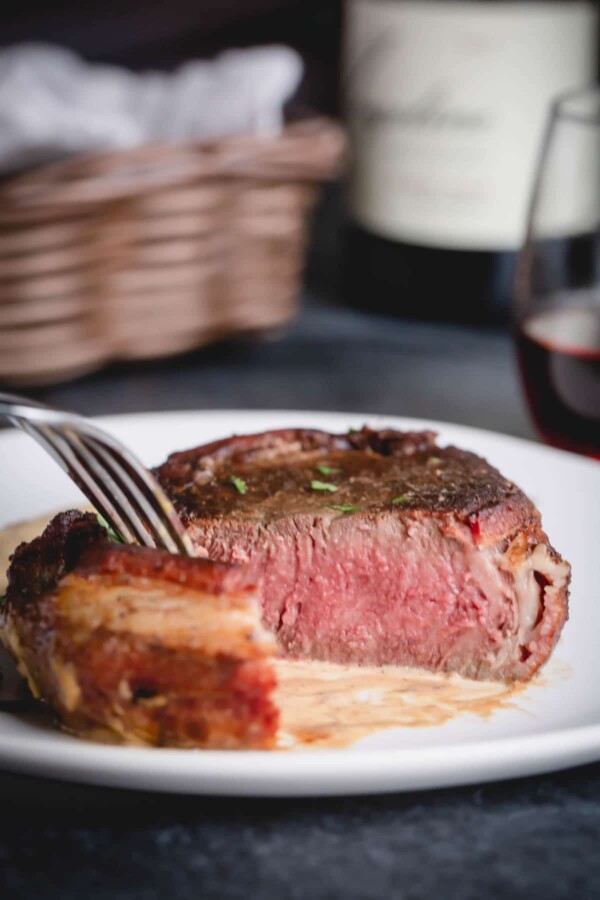
Salty, sweet, and savory with a melt-in-your-mouth texture, this is the best boneless prime rib roast recipe you’ll ever make! Follow my step-by-step process and foolproof reverse searing method for a simple main course guaranteed to impress all your guests.
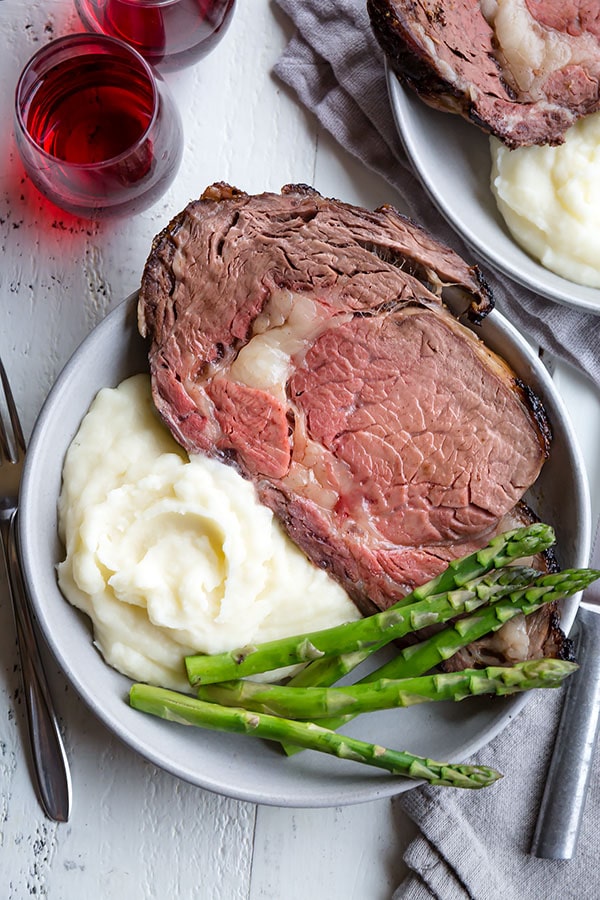
Why you’ll love this reverse-seared boneless prime rib
Don’t worry if you’ve never cooked a prime rib before. I’ll show you how to roast an evenly cooked prime rib with a gorgeous crispy crust!
It’s perfect for holiday parties, large gatherings, or anytime you want something special.
- Failproof – The reverse searing method and low and slow cooking process guarantee this prime rib roast recipe always turns out perfectly.
- Flavorful – Every bite is packed with sweet, savory, salty flavor with a juicy texture that leaves all your guests coming back for more.
- Crowd-pleasing – One roast makes enough to serve 10-12 people and is always a hit with friends and family!
Pair your prime rib roast with roasted garlic mashed potatoes, honey glazed roasted carrots, and homemade dinner rolls for a restaurant experience from the comfort of your home!
Table of Contents
Key Ingredient Notes
- Boneless prime rib – Prime rib is a cut of meat from the primal rib section of the cow (hence the name). It’s also referred to as a standing rib roast, rolled rib roast, or ribeye roast. For this boneless prime rib recipe, I use a 6-pound cut, which makes enough to serve a crowd.
- Seasonings – Coarse kosher salt and Montreal steak seasoning season the meat and create a golden, crisp crust that adds incredible savory flavor.
- Minced garlic – Feel free to add more if you’re a garlic lover like me! Freshly minced cloves will give you the best flavor, but pre-minced garlic also works.
- Olive oil – This helps the seasonings stick to the beef and helps lock in flavor and moisture. Avocado oil will also work if preferred.
- Brown sugar adds a delicious sweet taste that pairs fabulously with the rest of the complex flavors.
- Worcestershire sauce – This helps tenderize the beef and adds a delicious salty, smokey, umami taste.
How to choose the perfect boneless prime rib roast
When it comes to picking the best roast, there are a few factors to look out for:
- Marbling – Look for a roast that has a lot of marbling. This is the white that runs throughout the meat. It’s actually fat that melts as the beef cooks, making it super juicy and flavorful.
- Fat Cap – We want to use a cut that has a layer of white fat at the top. This sinks into the meat as it cooks, making it unbelievably tender and delicious.
- Size – Larger roasts are actually easier to cook. For the best results, look for one that is fairly even in size all the way around.
How to make the best prime rib roast recipe:
1. Prepare the roast
- Place an unwrapped prime rib on a tray, generously salt it all over, and refrigerate it overnight. This helps create the beautiful crust we want!
- Bring the prime rib to room temperature on the counter. This typically takes about two hours.
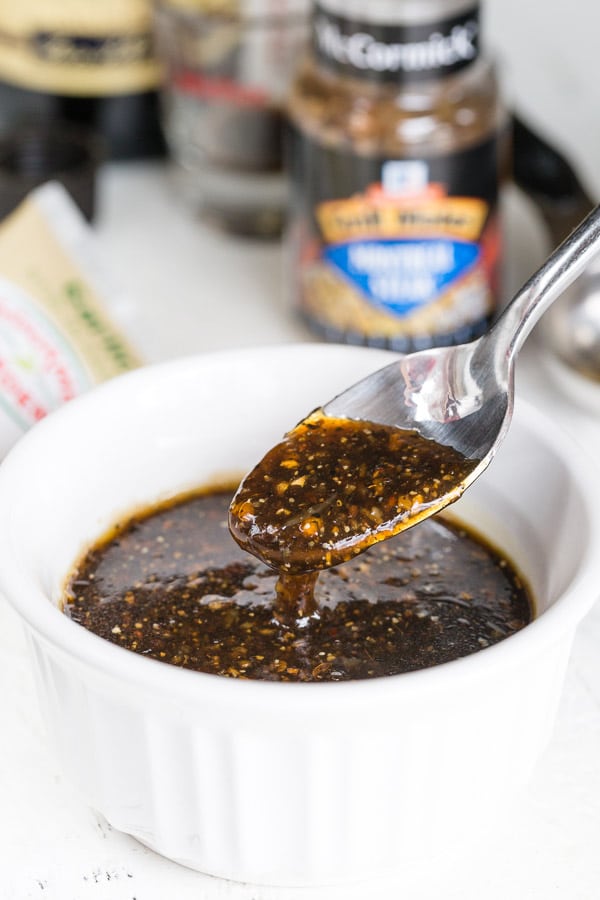
- Mix the olive oil, seasonings, and Worcestershire sauce in a bowl.
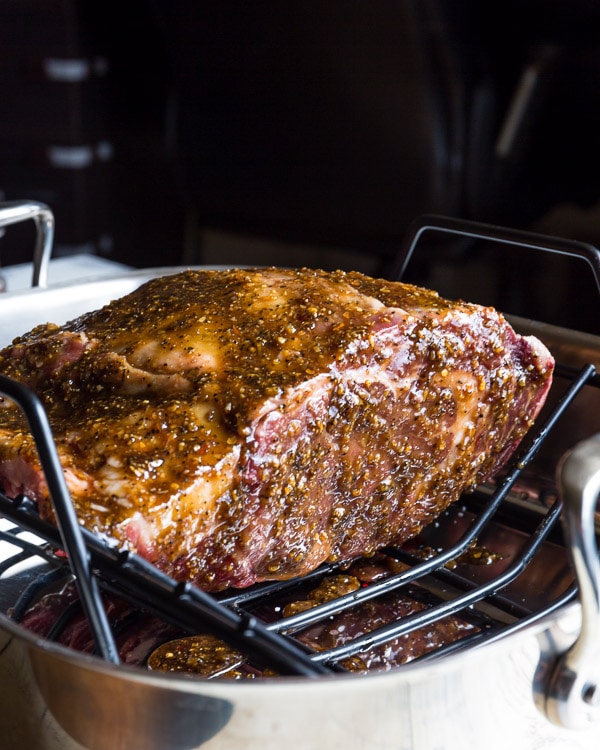
- Spread the seasoning mixture evenly over the meat.
2. Roast
- Preheat your oven to 200°F.
- Place the seasoned roast on a roasting pan fat side up. (I use this roaster and highly recommend it.)
- Roast for about 3.5 hours or until the meat reaches your desired doneness.
- Remove the prime rib from the oven, cover it with foil, and let it rest for about 30 minutes. This helps the natural juices redistribute, keeping the meat juicy and tender!
Use a meat thermometer
Do not try to eyeball your roast, or you’re likely to overcook it. Instead, use a meat thermometer like a Thermapen ONE to check the internal temperature. You want it to read 120°F for medium-rare or 130°F for medium.
3. Sear the roast
- Increase the oven temperature to 500°F.
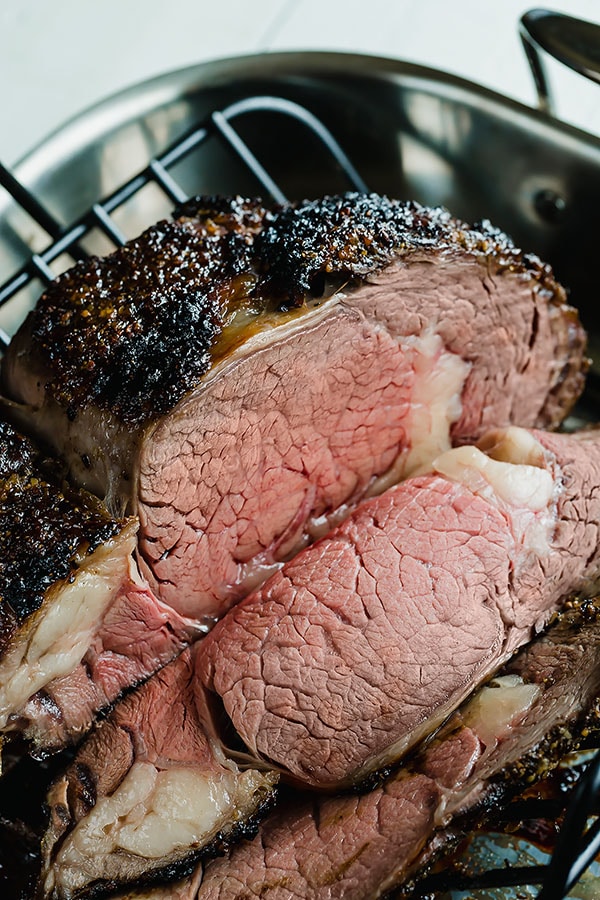
- Place the uncovered prime rib back in the oven 10 minutes before serving, and cook until it’s nice and brown and crisp on the outside.
- Rest for 10-15 minutes. Then, slice and serve!

Tips for Success
- Don’t skip the reverse sear! This is just the process of cooking the roast at a low temperature and then roasting it at a high temperature for a short time. This is the key to keeping it juicy and achieving maximum flavor!
- Use a meat thermometer. Make sure to use a meat thermometer to ensure the prime rib roast cooks completely to your desired doneness. You don’t want to take a chance on over or undercooking this pricey cut of meat!
- Let the roast rest. I know it’s tempting to start carving right away but trust me. It’s crucial to allow plenty of resting time. Otherwise, your roast will turn out dry and chewy.
- Cut against the grain. When slicing, cut the roast against the grain. This means you’ll slice perpendicular to the natural lines in the meat. This helps break any tough fibers, keeping the meat tender.
- Adjust the cooking time. Depending on your oven and the size of your roast, you may need to adjust the cooking time. Take a look at the chart below, and be sure to check the internal temperature of your roast.
Make-Ahead Tips:
Not only can you prepare this boneless prime rib roast recipe ahead of time, but you definitely should!
- Salt and refrigerate your roast up to 1 day in advance.
- Set it out at room temperature 2 hours before cooking, and proceed with the recipe.
If you fail to salt the roast, it won’t develop the nice crust we want and will be more likely to turn out dry and tough.
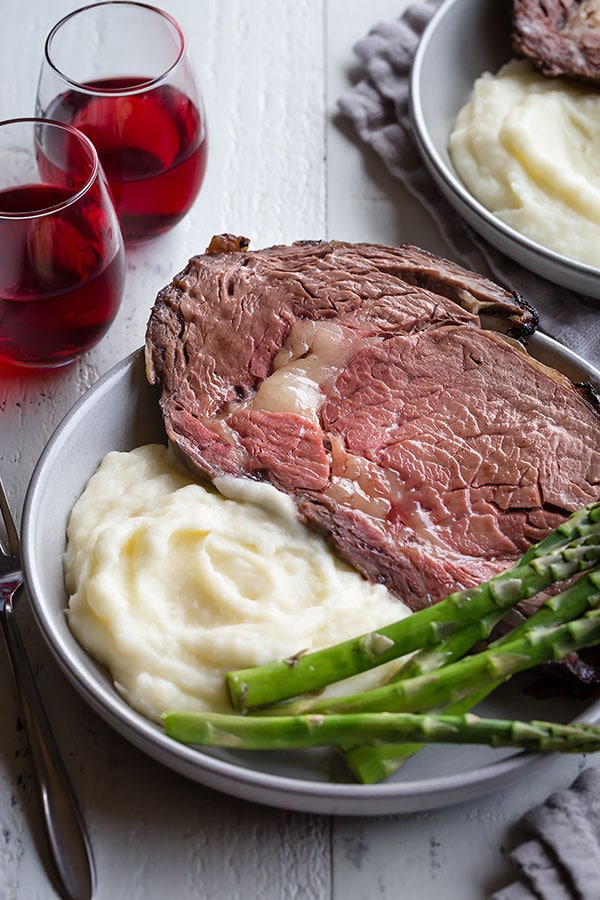
Serving Suggestions
Prime rib goes well with pretty much any side dish. However, if you’re looking for inspiration, some of my favorite options include:
Storing Tips
- Store leftover boneless prime rib wrapped in plastic wrap or in an airtight container in the fridge for up to 5 days. If possible, leave the leftover roast unsliced and slice before you plan to serve it.
- Freeze leftovers wrapped tightly in plastic wrap for up to 6 months. Thaw in the fridge overnight when you’re ready to eat.
- Reheat the roast in the oven to 250 degrees Fahrenheit. Place the meat in a baking dish with a splash of beef broth, and cover it with foil. Then, roast just until heated through. If you really have to, you can microwave leftovers, but they won’t turn out quite as juicy.
FAQs:
It depends on the size of your roast and the accuracy of your oven! It’s best to temp the roast so you don’t accidentally overcook it. A 6-pound roast took approximately 3.5 to 4 hours to come to an internal temperature of 120°F (medium-rare). It will take even longer to reach medium.
Prime rib and a rib roast are both cut from the primal rib section, specifically the 6th through 12th ribs. The prime rib has the bones intact. However, in a rib roast, the bones are removed before it is sold. The rib roast is often cut into ribeye steaks for grilling.
General rule of thumb, plan on serving 1/2 pound of meat per person. However, I suggest adding an extra pound for each person just in case. Plus, leftover prime rib is never a bad thing! So, if you’re having 8 adults for your dinner party, buy a 5-pound boneless prime rib. If you’re going with a bone-in prime rib, plan on 2 people per rib, and follow the directions in my bone-in prime rib recipe.
More Main Courses
- Roasted Rack of Lamb
- Roast Leg of Lamb with Red Wine Gravy
- Perfect Grilled Steak
- Stuffed Turkey Breast
The BEST Boneless Prime Rib Roast
Ingredients
- 6 lbs boneless prime rib
- 1 tablespoon coarse kosher salt
- 3 tablespoons olive oil
- 3 tablespoons Montreal steak seasoning
- 3 tablespoons brown sugar
- 2 tablespoons Worcestershire sauce
- 1 tablespoon minced garlic
Instructions
- Place an unwrapped prime rib on a tray. Generously salt all over and refrigerate overnight to air-dry the outside of the prime rib.
- Bring the prime rib to room temperature before roasting. It’ll take about 2 hours out on the counter.
- Mix olive oil, Montreal steak seasoning, sugar, Worcestershire sauce and garlic until smooth. Then evenly spread the mixture all over the roast.
- Preheat the oven to 200°F (95°C).
- Place the prime rib on a roasting pan fat side up. (I use this roaster, and highly recommend it.) Roast the meat in the oven until the center of the roast reads 120°F (50°C) on a meat thermometer for medium-rare, or 130°F (55°C) for medium doneness, about 3.5-4 hours. (This instant thermometer is my favorite! Super quick and reliable!)
- Remove the prime rib from the oven, cover with a foil and rest for about 30 minutes.
- Meanwhile, increase the oven temperature to 500°F (260°C).
- 10 minutes before serving, pop the prime rib into the oven, uncovered, and cook it until it’s nice and brown, and crisp on the outside, about 6-10 minutes. Rest for 10-15 minutes before slicing and serving.
⭐️ Did you make this recipe?
Please leave a review and let us know how you liked it!
Tips & Notes
– Store leftover boneless prime rib wrapped in plastic wrap or in an airtight container in the fridge for up to 5 days. If possible, leave the leftover roast unsliced and slice before you plan to serve it.
– Freeze leftovers wrapped tightly in plastic wrap for up to 6 months. Thaw in the fridge overnight when you’re ready to eat.
– Reheat the roast in the oven to 250 degrees Fahrenheit. Place the meat in a baking dish with a splash of beef broth, and cover it with foil. Then, roast just until heated through. If you really have to, you can microwave leftovers, but they won’t turn out quite as juicy.
Nutrition




Hello and Happy Holidays,
I was wondering could I apply the mixture and marinate it overnight? Also, does it matter if I have a ribeye roast instead of prime rib?
Hi, Walter! Yes, you can apply the mixture the night before. And ribete roast would be perfect as well. Happy Holidays!
I’ve cooked prime rib a bunch of times with the tried & true method of 500 for 40 mins, then drop oven temp to 325 and cook until internal temp reaches desired temp.
I’ve got a 10 lb roast I am going to try your way this weekend but I have one question.
Is the “1 tablespoon minced garlic” the dry minced garlic or the minced garlic in oil you buy in a jar? I don’t see the exact description in the article or recipe.
Hi, Rob. I’m excited for you to try this method. I hope you’ll love it! For minced garlic, I mince the garlic myself. Use dry minced garlic. I have no experience with minced garlic in oil.
My roast is 4LB, would this recipe work and how long would it take at 200. I am cooking this on New Years day
thanks
Hi, Pamela. I’d estimate about 3.5 hours for 4lbs roast to reach 120-125°F at 200°F. Make sure to bring it to room temperature before putting it in the oven.
Excellent!
Awesome, so happy you loved the recipe. Thank you for your feedback, Rosemary!
If you like your meat medium well, will cooking at 200° do it? What would the internal temp be for medium well. And the reversed searing will work?
My roast is 13lbs.
Hi, Dennis. Internal temperature for medium well is 140-145°F. So you’ll want to cook the roast till about 130-135°F. If you want evenly cooked (crust to crust), roasting at 200°F is the best, but it’ll take longer. I don’t have an estimate time, as I never cooked my prime rib past 125°F internal temp, but just for reference it takes about 4 hours for 13lb roast to reach 120-125°F. If you’d like you can increase the oven temp to 250°F to expedite the cooking time. Hope this helps. Let us know how it turns out. Merry Christmas!
We tried this recipe for our Christmas Day meal. I was a bit skeptical, as we normally use the sear first method. However, our prime rib using the reverse sear method came out perfectly and the spice mixture was delightful. We will definitely keep this as our go to recipe for prime rib. Thanks for sharing this recipe.
Awesome!!! Thank you so much for trusting my recipe for your holiday menu!! And I really appreciate your feedback. Merry Christmas!!
I am doing a 13# boneless how long will this Take?
Hi, Tony. I’d estimate it’ll take about 4.5 hours at 200°F for 13lbs roast to reach 120-125°F internal temperature. Hope this helps. Let us know how it turns out. Merry Christmas!
I’m making this tomorrow night and I’m nervous about the length of time. My rib roast is boneless and 5.5 lbs. Do you still cook it for3 1/2 hours at 200’F?
Can I do the same thing with a bone in prime rib? It’s my first time making it and I’m getting nervous.
Thanks!
Hi, Nicole. Yes, bone-in prime rib would work beautifully. Hope you’ll enjoy! Let us know how it turns out. Merry Christmas!!!
Awesome Recipe SHINEE. Love your unique spice mixture. Will taste it soon.
Thank you, Ellen!