

Learn how to make a classic French bread recipe using just four ingredients! Crisp on the outside and soft and fluffy in the center, this is the easiest, most delicious bread you’ll ever make.

Why you’ll love this French bread recipe
If there’s one thing I could smell the rest of my life, it would be homemade bread, especially if it’s this French bread baguette recipe! It fills my home with a warm, delicious aroma that makes me feel like I walked into a bakery.
- Simple – Don’t worry if you’ve never made bread before. With four ingredients and simple steps, this crusty French bread recipe is surprisingly easy to make.
- Texture – The outside of the bread is crisp and crusty, and the center is soft and fluffy, creating a satisfying bite.
- Flavor – Subtly sweet, with a light, savory, yeasty taste, this French bread recipe tastes gourmet.
Don’t worry if you’ve never worked with yeast before. It’s so easy, and I’ll walk you through all my tips and tricks. By the time you’re done, you’ll feel like a professional baker, and you’ll never go back to store-bought bread again!

Key Ingredient Notes
- Sugar – As briefly mentioned in my sugar 101 post, sugar is a must when baking with yeast! Not only does it enhance the flavor of the bread, but it also helps feed the yeast, which leads to a softer, fluffier bread.
- Active dry yeast – There are two types of dry yeast – active dry yeast and instant dry yeast. Instant yeast helps the bread dough rise faster, but not by much. As a result, both active and instant dry yeast can be used interchangeably. Red Star Platinum is my favorite, but any brand you have on hand will work. Keep reading to learn more about the types of yeast and how to use them.
- All-purpose flour – This forms the base of the bread dough. I haven’t tested this recipe with gluten-free flour but think it would work if you use a 1:1 all-purpose gluten-free flour. I’d love to know how it goes if you try this French bread baguette recipe with gluten-free flour!
- Salt – This doesn’t make your bread salty but does enhance the flavor.
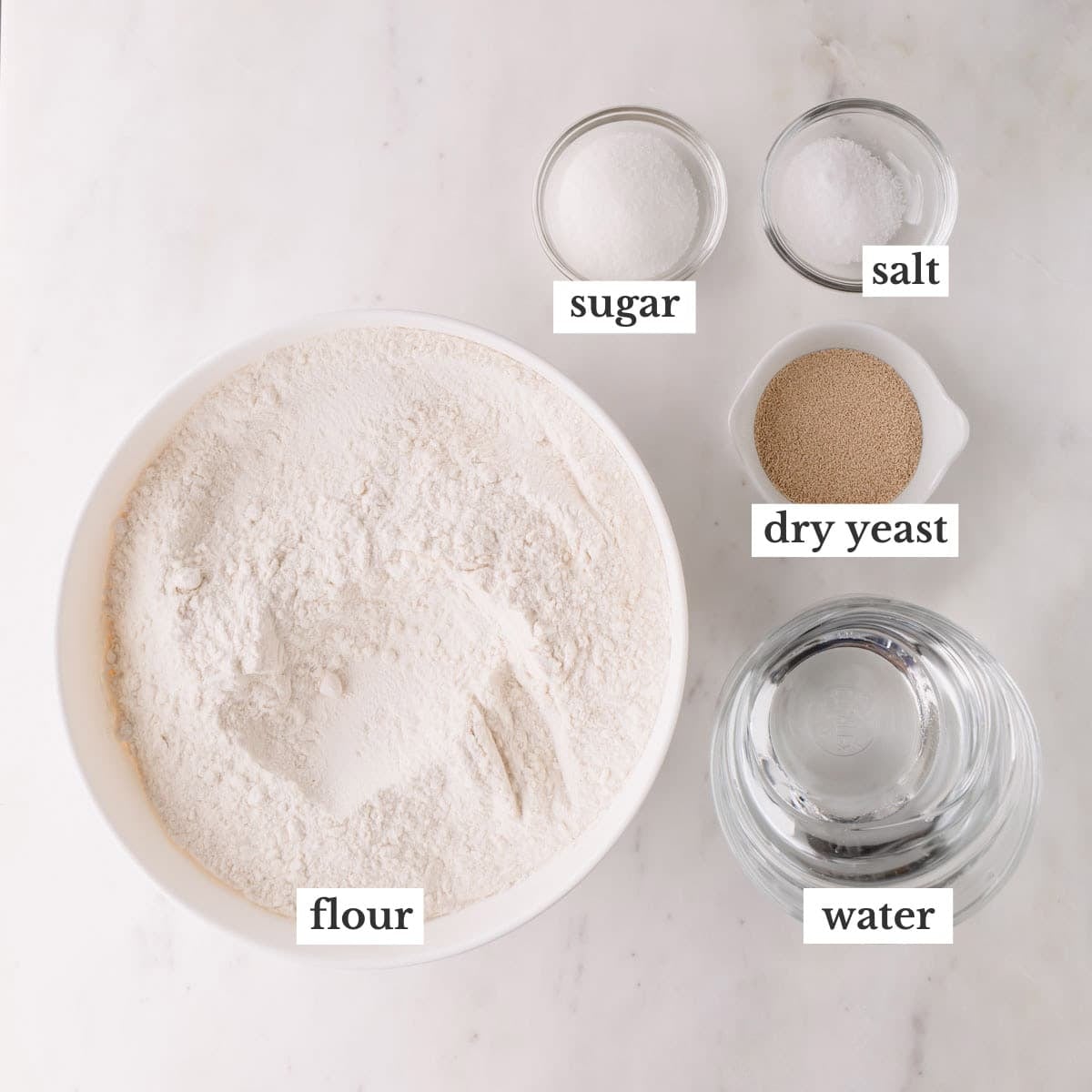
How to make classic French bread recipe with a mixer
1. Activate the yeast
- Dissolve the sugar in 1 cup of warm water.
- Stir in the yeast, and let the mixture stand for about 10 minutes.
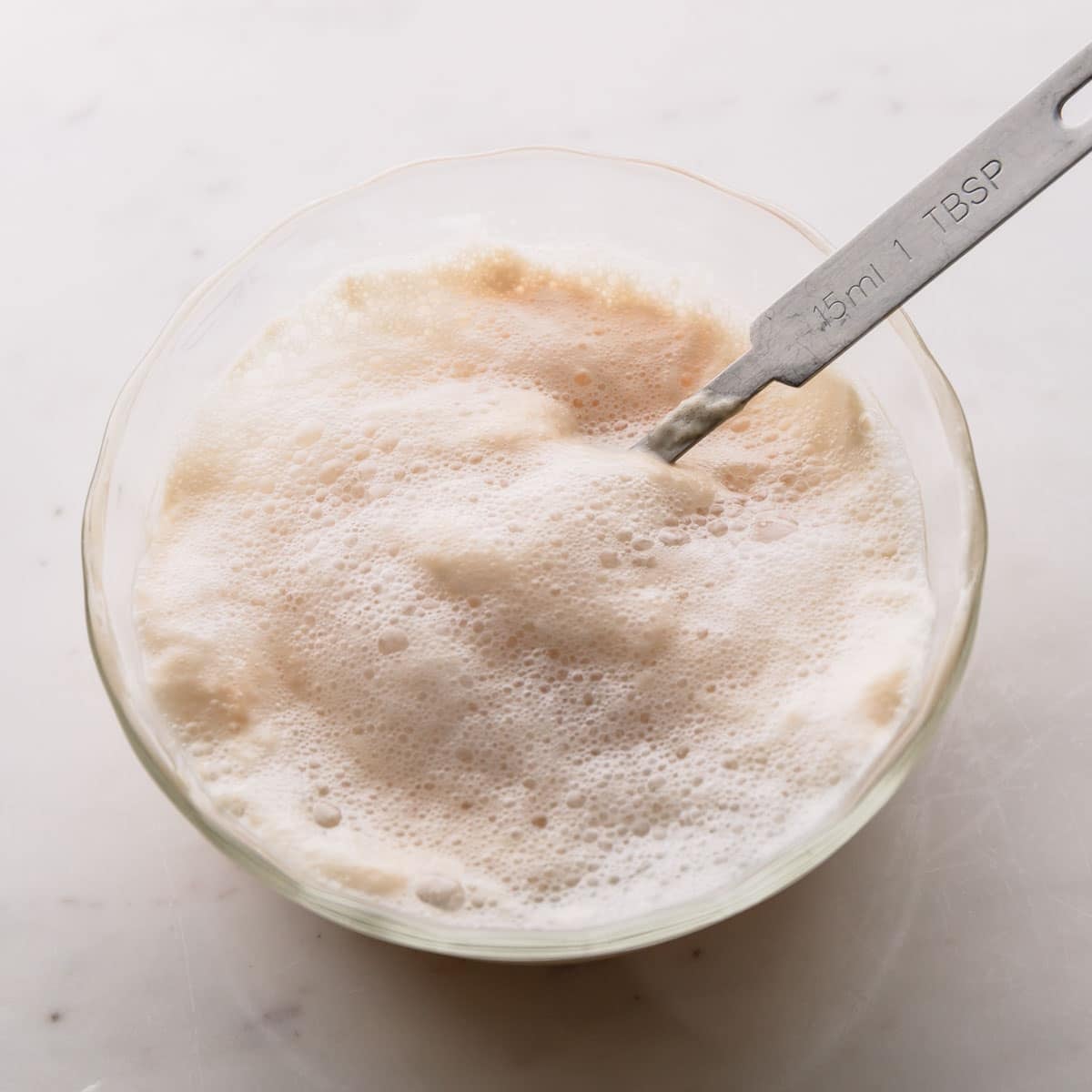
Consistency
After 10 minutes, the yeast mixture should be foamy, which indicates that the yeast is alive.
If it is not, you either have an expired yeast or used water that was too hot or cold. Toss out the mixture, and try again! Read more tips on working with yeast.
2. Prepare the dough
- Combine the flour and salt in a mixing bowl with a dough hook attachment.
- Add the yeast mixture and mix on low speed for 5 minutes. The dough should be soft and not very sticky at this point! It’s ok if the dough isn’t smooth at this point.
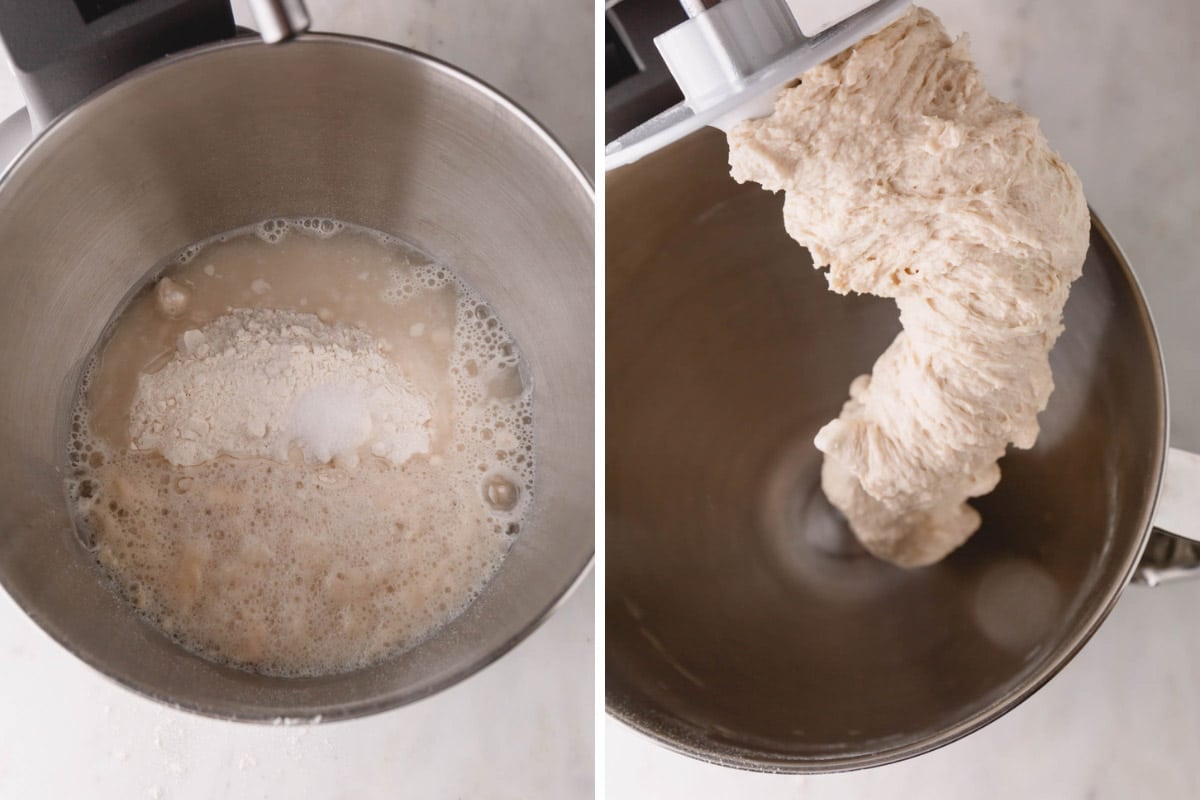
Adjust
Depending on the humidity, you may need to add a bit more flour. Be careful not to add too much, though!
- Rest for 5 minutes.
- Then, run the mixer on low again for another 3 minutes. Now, the dough should be nice and smooth.
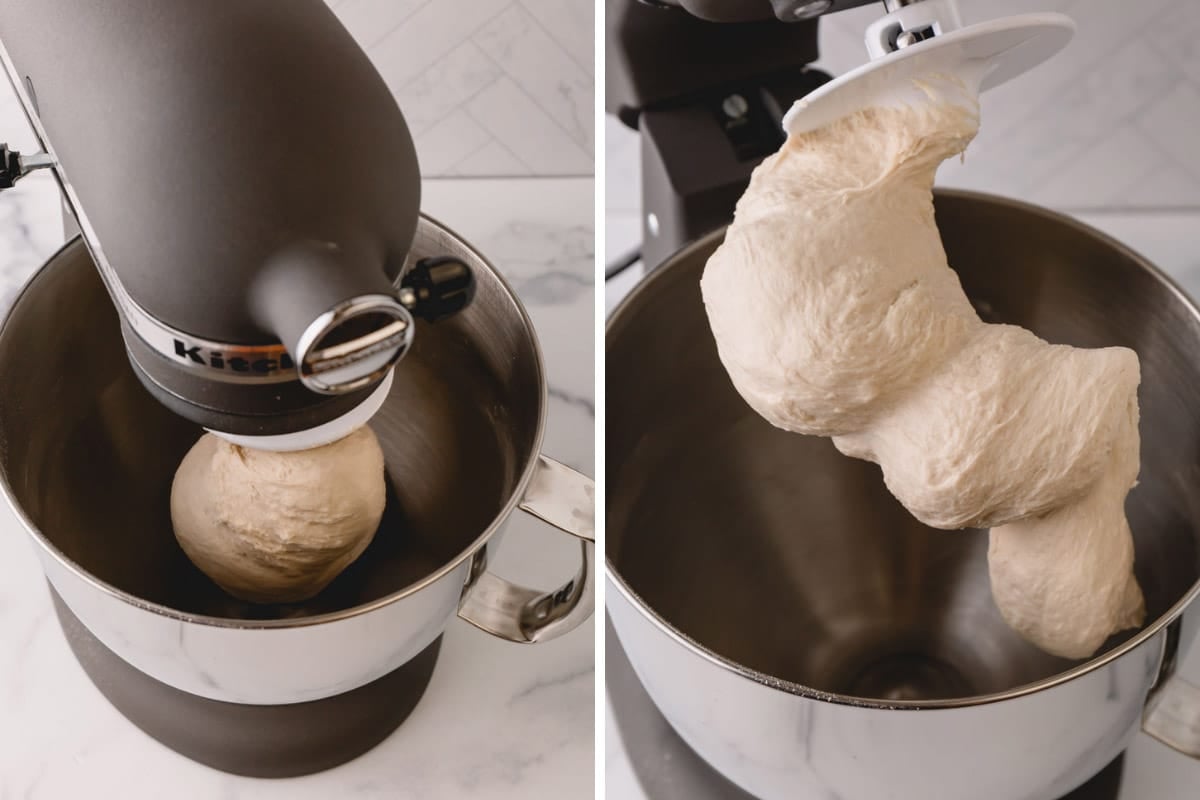
3. Let the dough rise
- Coat a bowl with a little bit of oil. (I use olive oil!)
- Place the dough in the bowl, and turn it around to coat it with the oil.
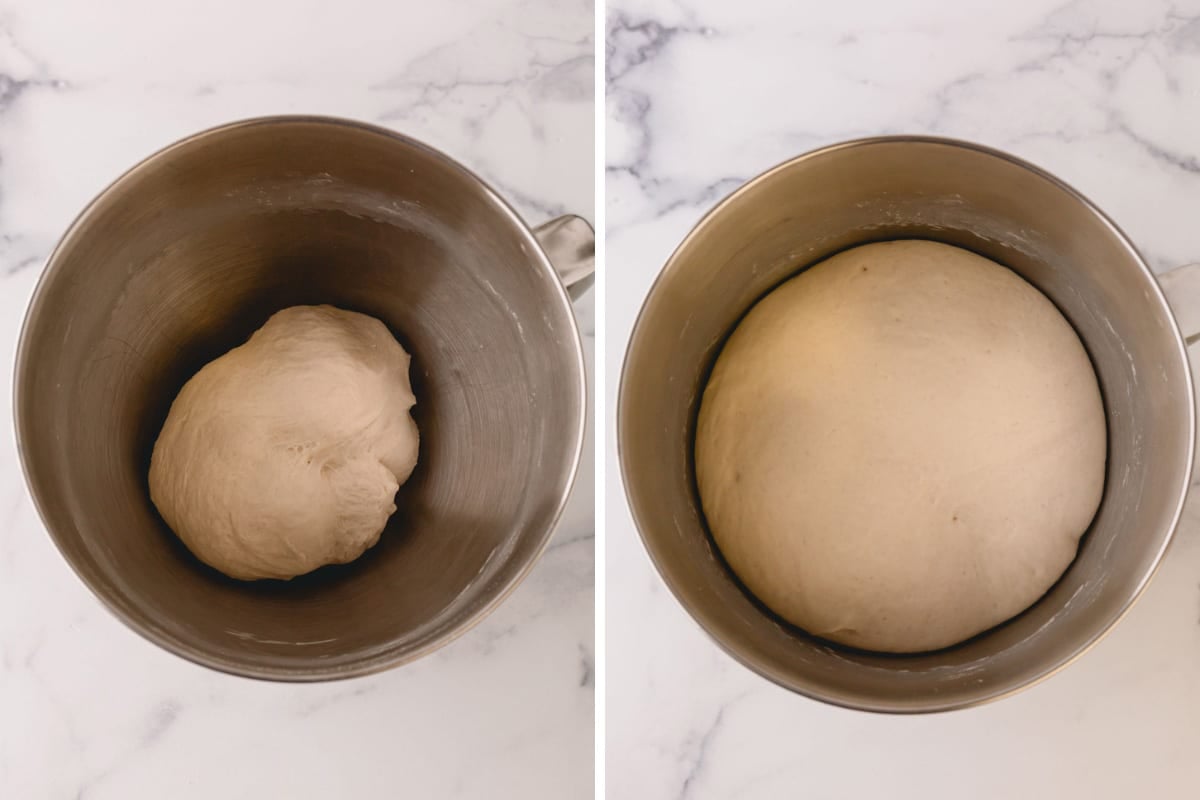
- Cover the bowl with a wet kitchen towel, and let the dough rise in a warm place until it doubles in size. This typically takes about 60-90 minutes.
Expedite the process
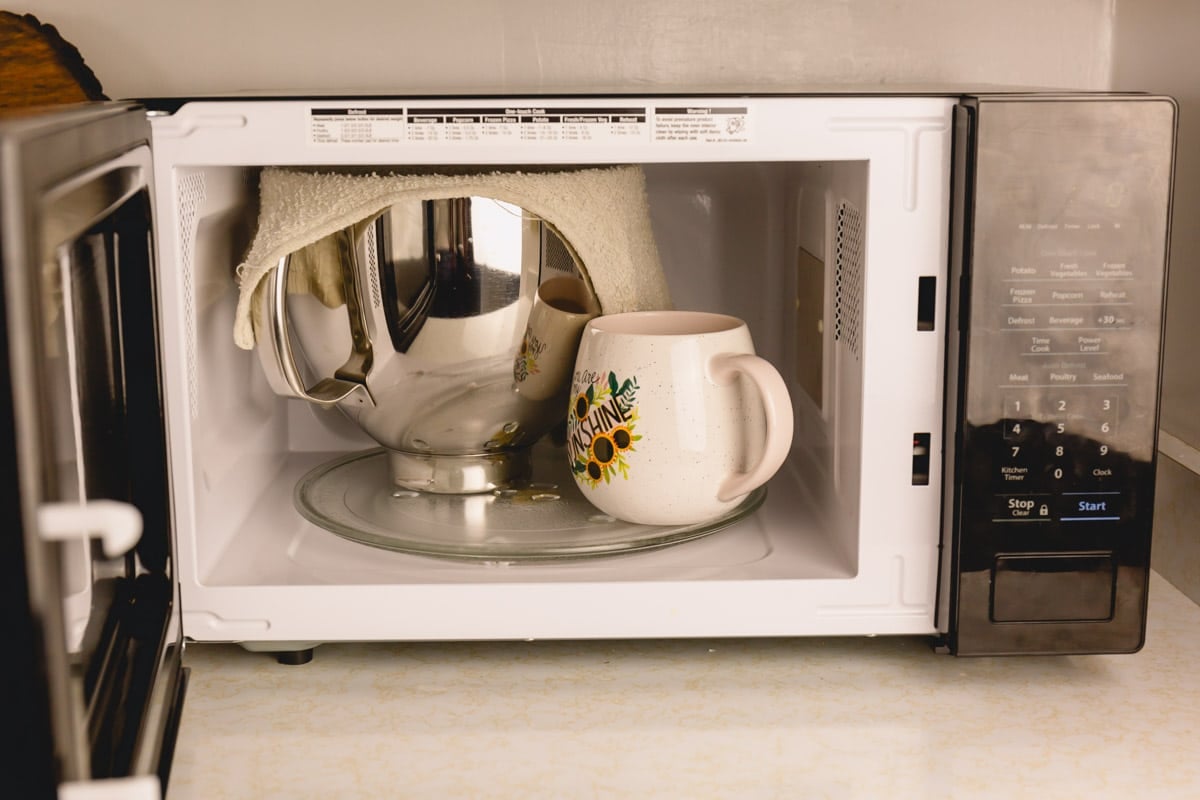
Use the microwave to create an insulated box to rise the bread dough.
- First, microwave a cup of water for 2 minutes to create steam.
- Then, put the covered bowl and hot water cup in the microwave.
Note we’re NOT microwaving the bread dough. We create a hot and steamy environment for the bread dough to shorten the time needed for the bread to rise.
3. Shape the breads
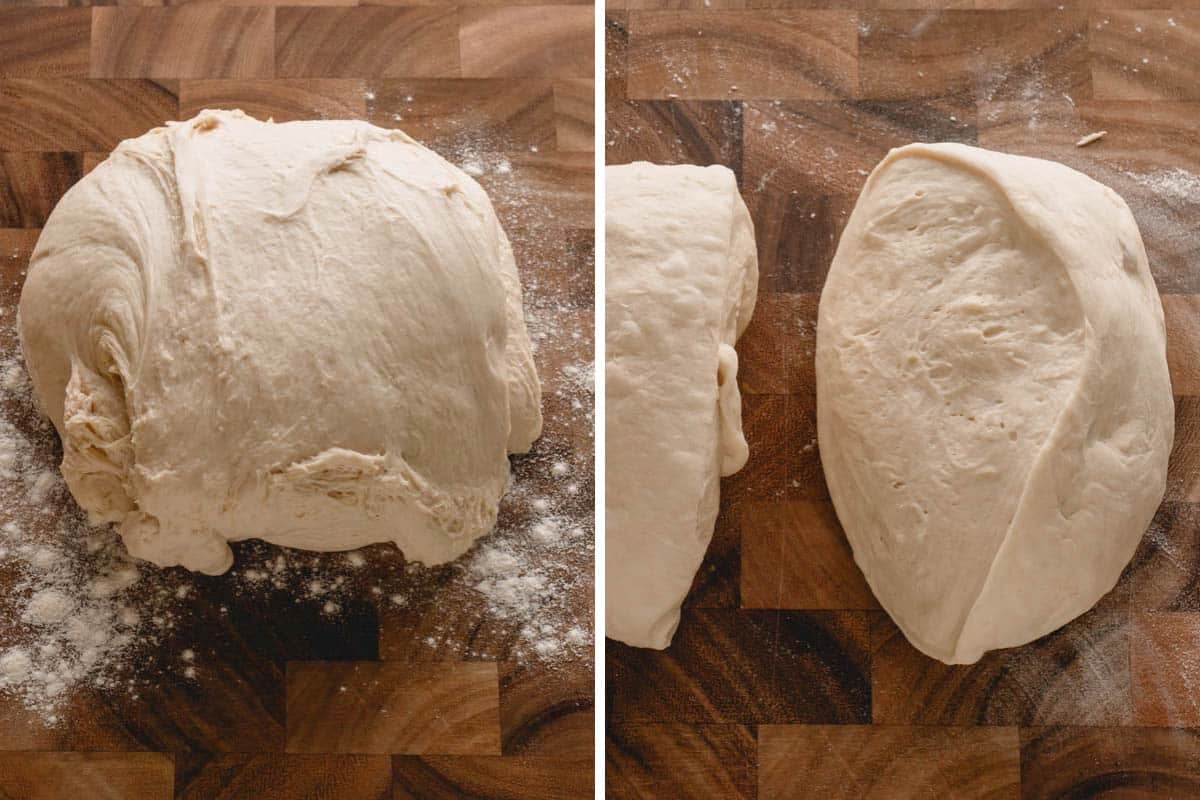
- Transfer the French bread dough to a lightly floured surface, and punch it down.
- Knead the dough into a nice smooth ball, and divide the ball into two equal parts. Or, feel free to divide it into four equal-sized pieces for smaller baguettes!
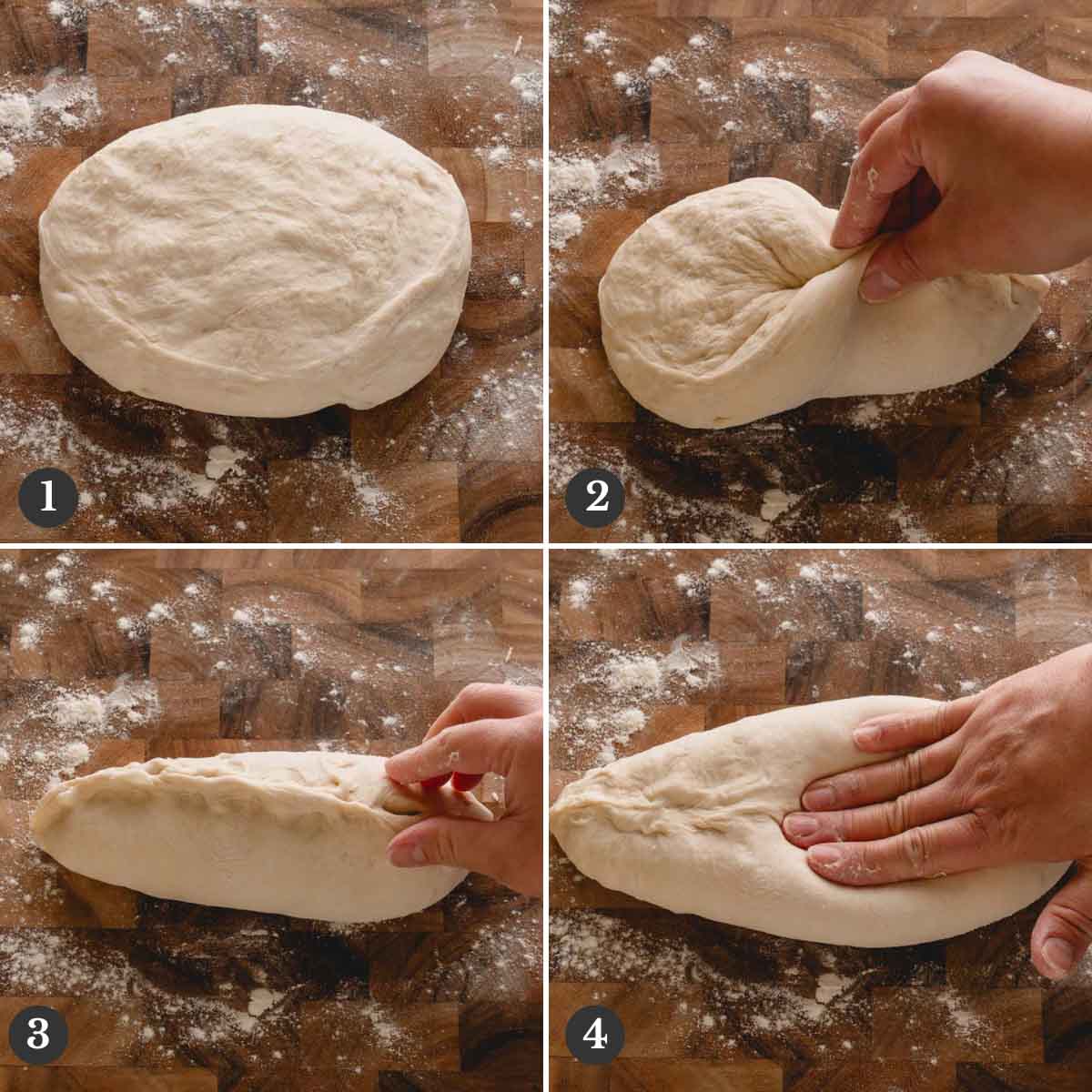
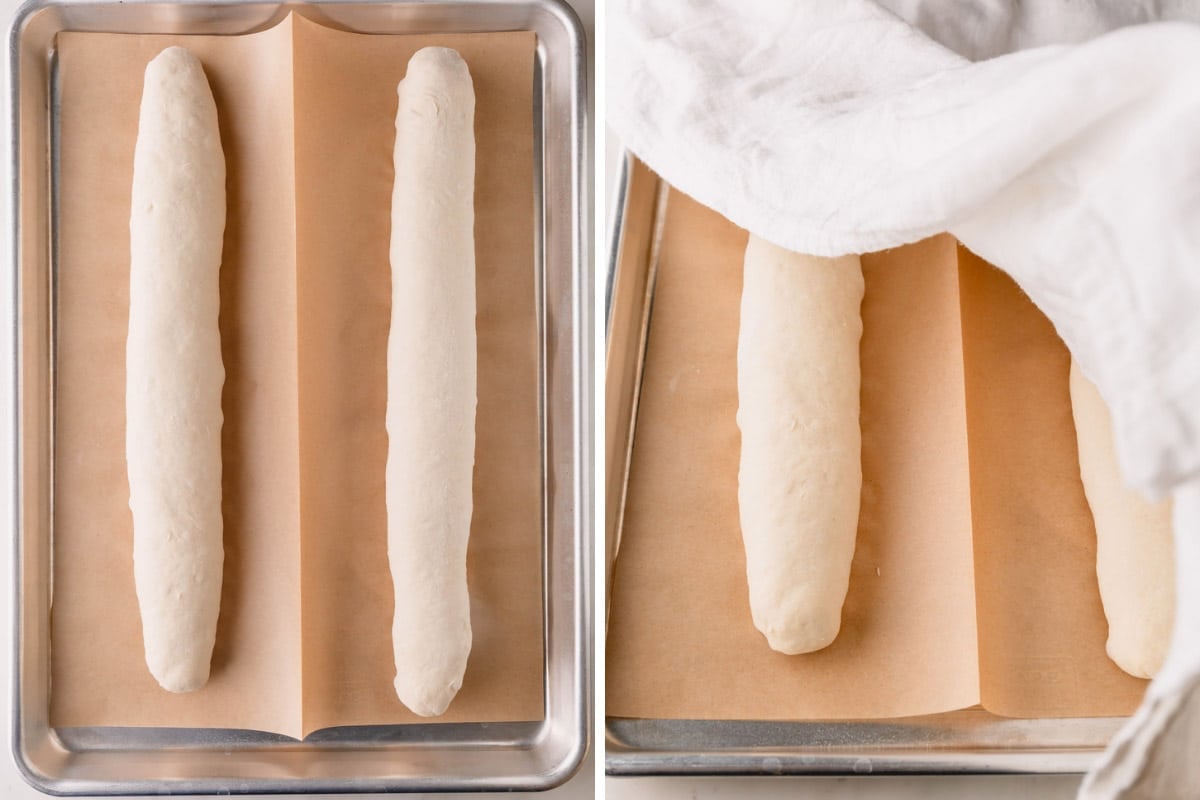
- Slightly flatten each dough ball, and pinch the long edges together. Repeat until you achieve your desired length.
- Place the dough logs on a baking sheet lined with parchment paper.
- Cover with a towel and set them aside to rise for another 30-60 minutes.
4. Bake the French Bread Baguettes
- Preheat your oven to 400°F while the baguettes rise.
- When ready to bake, reduce the oven temperature to 350°F.
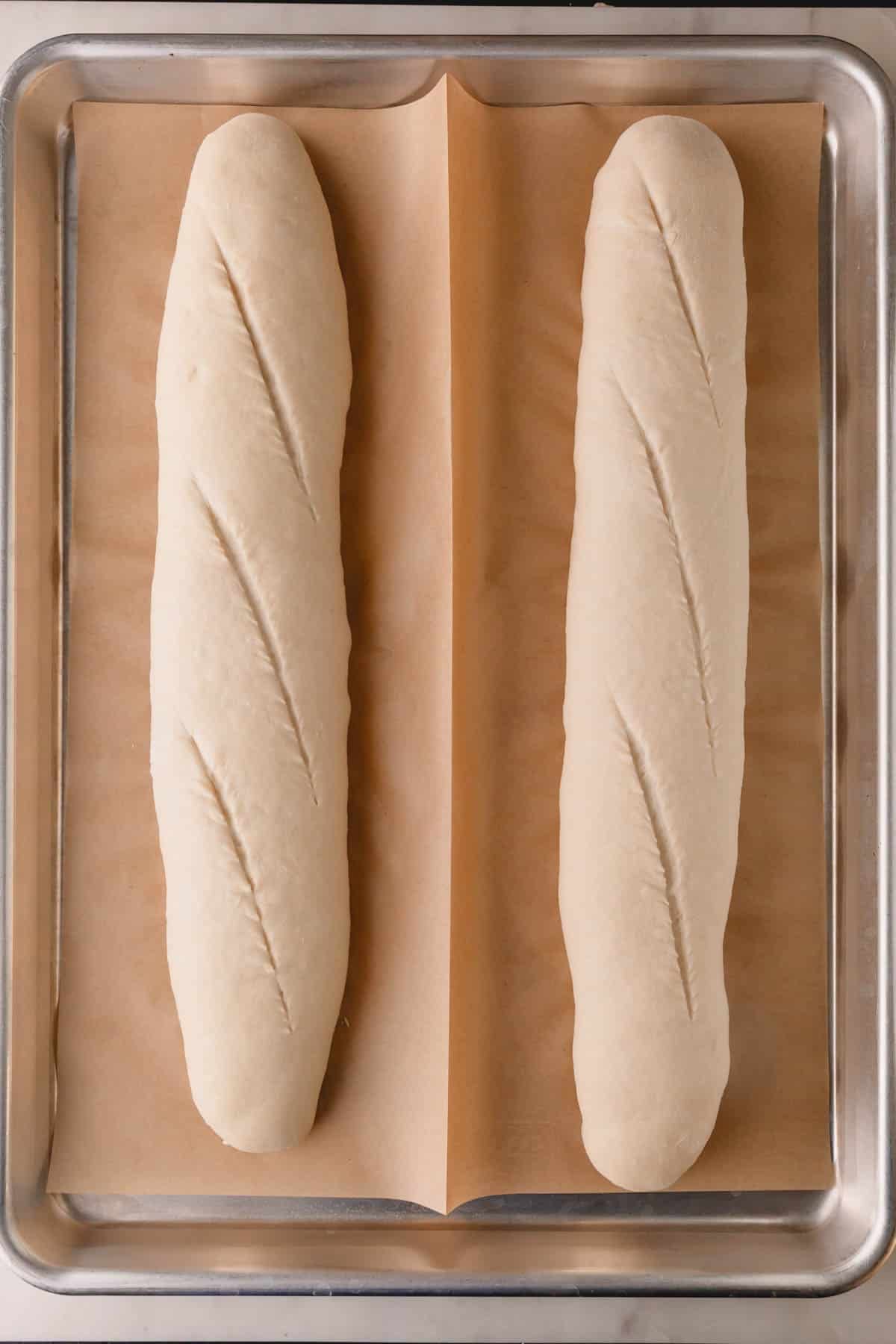
- Make diagonal cuts on the loaves right before baking.
- Bake the bread loaves until a nice, golden crust forms, about 30 minutes.
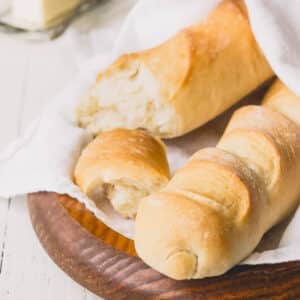
- Cool the baguettes on a wire rack, and enjoy!
How to make a crusty French bread recipe by hand
No mixer? No problem! You can make this easy French bread recipe by hand with just a little extra elbow grease.
- Activate the yeast as written in the recipe card below.
- Combine the flour and salt in a large bowl.
- Add the activated yeast mixture and knead until the dough comes together and forms a ball, about 5 minutes.
- Transfer the dough to a lightly floured kneading surface, and knead until a smooth ball forms.
- Rest the dough for 5 minutes. Then, knead again for about 10 minutes.
- Proceed with the recipe as normal, shaping and baking the baguettes.

Tips for Success
- Store dry yeast packets in the freezer to keep the yeast fresh for a very long time! That way, you’ll always have it on hand when you’re ready to bake this crusty French bread recipe.
- Measure the flour properly to ensure you get the proper ingredient ratios.
- If adding more flour, knead in just a little bit at a time until the dough is soft.
- Avoid overmixing or over-kneading the dough, combining the ingredients just until smooth. Overworking the bread dough will cause the baguettes to become dense and tough.
- Let the dough rest and rise in a cool, dry place to speed up the process and create fluffy loaves.
- Make sure to score the dough, cutting slices across the top! This helps it rise better and prevents cracking while it bakes.
- Add 3-4 ice cubes to the bottom of the oven right before baking for a crispy golden crust. The ice will create steam, creating a beautiful exterior.
- Brush egg wash over the dough before baking to create an even crispier crust, or brush melted butter over the loaves immediately after baking for a richer taste.
- Let your French bread baguette recipe cool completely before slicing and serving. Otherwise, the bread will deflate and be slightly mushy in the center.
Storing Tips
- Store this French bread recipe in an airtight container or sealable bag at room temperature for up to 1 week. Just note that the longer it sits, the more stale the bread will taste. I like to bake it for 5 minutes at 350°F before serving for a perfectly crisp crust!
- Freeze leftover bread for up to 2 months. Let the baguettes cool completely. Then, wrap them tightly with plastic wrap, and transfer them to a sealable bag to store in the freezer.
- Thaw frozen French bread in the fridge overnight, bake at 350°F for about 5 minutes to crisp the crust back up, and enjoy!
FAQs:
Aside from the fact that French bread is sold as long baguettes. It is made with minimal ingredients including flour, water, salt, and yeast, and is free from butter or oil found in other bread recipes. As a result, it has a distinct, crisp exterior and chewy center.
Authentic French bread is made with type 55 flour. This is a type of flour that has a lower protein content than regular all-purpose flour. Unfortunately, it’s very difficult to find in the United States. So, regular all-purpose flour will work just fine.
The simple ingredients and unique baking process, consisting of multiple rises and scoring, contribute to the unique sweet, slightly savory taste, crispy exterior, and soft, fluffy center French bread recipes are known for.
More Homemade Bread Recipes
French Bread
Ingredients
- 1 cup warm water between 110°F and 115°F
- 1 tablespoon granulated sugar
- 1 ½ teaspoons active dry yeast
- 3 cups (375 g) all-purpose flour
- 1 teaspoon coarse kosher salt
Instructions
To activate the yeast
- In a large cup, combine water, sugar and yeast.
- Stir and let it stand for about 10 minutes. The mixture should become foamy, which indicates the yeast is alive. If the mixture doesn’t foam, you have expired yeast, or used too hot or too cold water.
To make the dough
- In a mixing bowl with a dough hook attachment, combine the flour and salt in a mixing bowl.
- Add the yeast mixture and mix on low speed for 5 minutes. The dough should be soft and not very sticky. (Depending on humidity, you may need to add a little bit more flour, but not much though.)
- Rest the dough for 5 minutes, then run the mixer on low again for another 3 minutes.
- Alternatively, you can make the dough by hand: Combine the flour, salt, and yeast mixture in a large bowl. Knead until the dough comes together into a ball. Transfer the dough onto a lightly floured kneading surface. Let the dough rest for 5 minutes, then knead again for 10 minutes.
To proof the dough
- Coat a bowl with a little bit of oil. (I use olive oil.)
- Place the dough in the bowl, turn the dough around to coat it with oil, and cover it with a wet kitchen towel.
- Let the dough rise in a warm place until doubled in size, for 60-90 minutes. (My secret place: a microwave! First, microwave a cup of water for 2 minutes to create steam, then put the bowl with dough covered with a wet kitchen towel.)
- Once the dough is doubled in size, transfer it onto a lightly floured surface and punch it down.
- Knead it into a nice smooth ball and divide it into 2 equal parts. (You can also divide the dough into 4 parts to make smaller baguettes.)
- Slightly flatten each dough and pinch the long edges together. (This technique is Julia Child’s method). Repeat until the desired length. See the step-by-step pictures above.
- Place the logs on a baking sheet lined with parchment paper.
- Cover with a dry kitchen towel and let them rise for another 30-60 minutes.
- Meanwhile, preheat the oven to 400°F (200°C).
To bake
- When ready to bake the bread, reduce the oven temperature to 350°F (177°C).
- Using a sharp knife, make deep diagonal cuts on the loaves.
- Bake the loaves for about 30 minutes or until the crust is nice and golden.
- Cool on wire racks before serving.
- Keep the bread at room temperature in an airtight container. Right before serving, I bake it for 5 minutes at 350°F (177°C) for a perfectly crispy crust.
⭐️ Did you make this recipe?
Please leave a review and let us know how you liked it!
Tips & Notes
– Store this French bread recipe in an airtight container or sealable bag at room temperature for up to 1 week. Just note that the longer it sits, the more stale the bread will taste. I like to bake it for 5 minutes at 350°F before serving for a perfectly crisp crust!
– Freeze leftover bread for up to 2 months. Let the baguettes cool completely. Then, wrap them tightly with plastic wrap, and transfer them to a sealable bag to store in the freezer.
– Thaw frozen French bread in the fridge overnight, bake at 350°F for about 5 minutes to crisp the crust back up, and enjoy!
Nutrition
This recipe was originally published on June 19th, 2013.






Bread came out great! Didn’t get the full golden color but didn’t want to over bake it. Tastes almost like store bought! Fluffy inside and crusty outside. Yum!
Awesome. Glad you enjoyed it. And thank you for your feedback, Crystal!
My bread came out delicious and it was super easy! Except it was very heavy, not add light and fluffy as i was hoping. Did i do something wrong? Ore is that just how it is? I think i might adapt it for a sandwich bread
Hi, Angela! This bread isn’t fluffy and airy like a sandwich bread, but it should be soo heavy either. The crust is crisp and chewy, but the inside should be light and soft.
Mine is the same way. It’s just completely crumbly and dry and not forming together into a dough. I measured 3 cups but it is definitely too dry. Do I add more water?
Hi, Karen. Yes, add water a little at a time until it forms into a smooth ball. Let me know how it goes.
I’m so sorry, but am I the only one having extreme trouble with the dryness of the dough? After I add the yeast and water mixture it still refuses to become dough- its just flour with a few crumbles. I’ve tried three times in a row and I’m having the same problem every time. It takes quite a bit more water to turn it into something I can knead. What am I missing?
Hi, Kelsey. I’m sorry you’re having problem. How are you measuring flour? By cup or by scale? It sounds like you’re having way too much flour, and it’s quite easy to overmeasure by cup. Let me know.
I was having this problem as well, but I kept mixing and somehow it all came together. My initial impression was this the dough was going to be way too dry, but it turned out softer than any I had made before after a good go of mixing and kneading.
Came out great!!! Wonderful recipe! Making it for the 2nd time since Christmas!
Awesome! Thanks for your feedback. Gameinatrix!
I can’t believe you baked this! It looks like it came from a bakery window- I love freshly baked bread and you make it look so easy 🙂
You’re so sweet, Medha! Thank you!!
Shinee, Julia Child.iin argaar gedeg n yamar arga baidag yum be? youtubees hailaa olsongui 🙁
Hi Onon, ene zuragtai zaavar deer uzuulseniig Julia Childiin arga gedeg yumaa. Gurilaa jaahan gonzgoi bolgoj bgaad havtgailaad chimhene. Tegeed teriigee dahiad havtgailaad chimhene, geh meteer hussen hemjeendee hurtel hiine.
Bayarlalaa, Shinee 🙂
eniig hiihdee buhel uriin gurilaar hiivel boloh boluu?
Bolno, bi gehdee 50% buhel uriin guril, 50% engiin guril hiigeerei gej zuvulmuur bn.
Bi ene talhiig yaag duuraij hiilee. 2 tsag tawiad ch hoosongui. er ni guril hoohku vh shaltgaan ni yu yum bol? Mantuun buuz ntr hiihd bolool bdg hernee talh ni deer hezee ch ajillahkuin
Oh tiimu? Ehleed droj chini muudsan yum bolov uu gesen chini mantuu hiij bolj bgaa bol ugui yum shig bn. Heterhii haluun usand hiij huulguh esiini uhuuleed bgaan bolov uu?
Mmmhan. usaa l tohiruulj chadku bgaa bololtoi tguul. guril ni deeree drojoo tsatsaad nuhwal boloh boluu?
Bolno, gehdee usaa hiihdee huiten bish, buleen usaar zuuraarai. Amjilt!
Lovely work, Shinee! Would you be happy to link it in to the current Food on Friday which is all about French inspired Food? This is the link . I do hope to see you there. There are already a lot of links for you to check out. Cheers
Hi Carole, thank you for visiting my blog! I would love to link this on your blog. Thanks for letting me know. 🙂